
Artist Books
I would define artist books as sequences or narratives which challenge the idea of the traditional book. These can be either experimental; shifting the sequence and materials, inviting the reader to redefine what a book could be, or more traditional; pages in chronological order telling a story encased by a front and back cover. Artist books are often perculiar and interactive, creating strong narratives and inviting the reader to rethink certain ideas, stories or themes, whilst showcasing the artists creativity and skill.
Turn Over Darling By Ronald King


Turn Over Darling is a simple yet effective artist book, using wire drawings which blind-emboss pages to illustrate the artists nude wife turning from front to back in a reclined position. I really like the intimacy of the illustrations which is mirrored by the use of material, the handmade paper gives a delicate feel towards the readers experience alongside the simple linework figure drawings of the embossement.
Street of Booksellers by Frances Jetter


Street of Booksellers is a magnificent artist book made by Frances Jetter in response to an artist call out for a project to commemorate Al Mutanabbi Street, a historic centre of Baghdad bookselling, which was destroyed in 2007 due to a car bomb during the Iraq war. Artists were asked to re-assemble some of the reading material through tribute works, “creating books that reflect both the strength and fragility of books, and showing the endurance of the ideas within them.”* I think Jetter’s response beautifully encapulates this idea, with the purposeful strong and organic material choice of wood for the ribcage cover, protecting the book block within which illustrates authors and writeres relevant to Al Mutanabi Street. The ribcage represents humanities efforts to protect knowledge and in this case, books.
*https://www.fjetter.net/artistsbooks.html
Barbra Wildenboer


Wildenboer’s collection titled Library of the Infinitesimally Small and the Unimaginably Large is an ongoing projected started in 2011, which is compllied of many altered books, “using the library as a metaphor for the universe”* Barbra plays with ideas of fractal geometry and connection between living things with her handcut adjustments to the carefully selected secondhand books. Her work also questions the longevity of phisical publications in this increasingly digital world.
*https://barbarawildenboer.com/art/library-of-the-infinitesimally-small-and-unimaginably-large/
The Great Gathering by Chris Ruston

Using this fossil like spiral shape, Chris Ruston’s Great Gathering collection tells the story of evolution through seven different volumes all touching on different themes. The number seven in relation to the amount of days it took God to create earth and the seven days in the week. The spiral shape is in resemblence of a journey, symbollically collecting knowledge and history as it meanders out from itself. The pages themselves are made up from historical papers, history books and recycled national geographic magazines, each volume shares a different story.
https://www.chrisruston.com/the-great-gathering.html
Tauba Auerbach


Auerbach is a skilled artist specialising in painting, sculpture and artist books based in New York. Her colourful and often mathematical approach to artist books are incredibly abstract, from her geometric 3 dimensional paper pop up books to her RGB Colourspace Atlas, her works are incredibly harmonious and almost too perfect looking.
Scott Blake Flipbooks
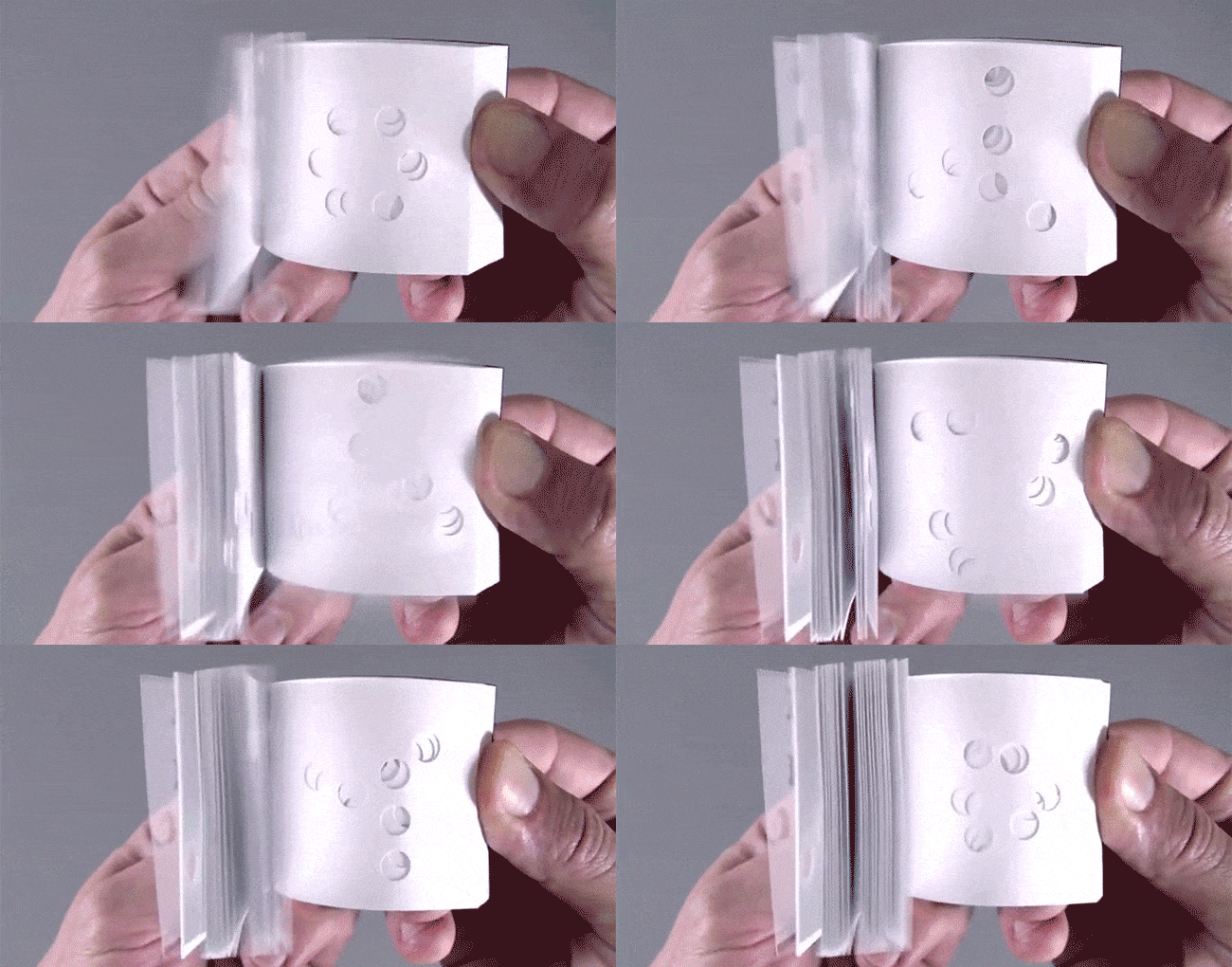
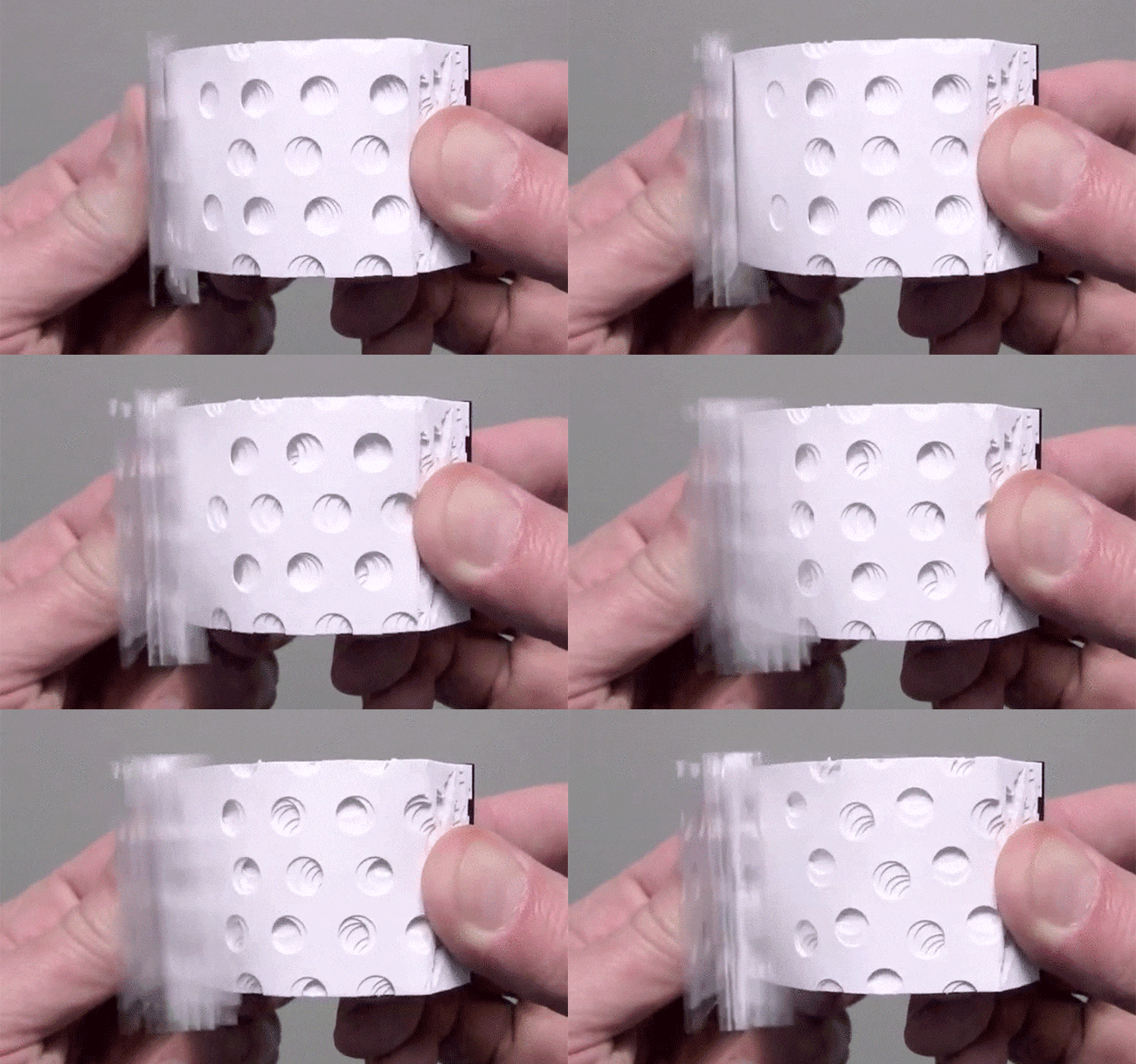
Artist Scott Blake creates these hole punch flipbooks which contain geometric patterns of circles, creating whirling animations as the book is flipped. I like the utilised method of negative space as the hole punches, as apposed to the regular method of printing.
Harumin Asao
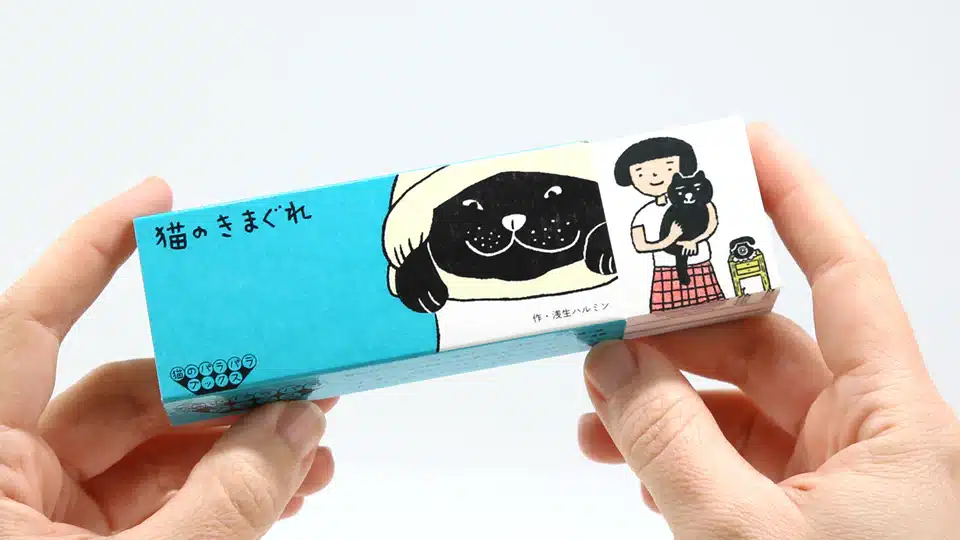


Harumin Asao’s illustrated flip book collection focusses on cats and their silly behaviours, the cute illustrated sequences complete the scene on all the pages on the right, and on the left another animated sequence is pictured of some relative character with less detail. I love this ides of utilising both sides of the book with two seperate animations.
Juan Fontanive

Juan Fontanive’s mechanical flip books are designed to remain untouched as they loop forever. He focusses on nature, and his colourful and lively illustrations capture movement wonderfully, hummingbirds work as a perfect subject for this with their rapid wing movement.

Gaia Alari
Gaia Alari is a visual artist and film maker, I stumbled across her page when looking for hand drawn animation inspo and I have fell in love with her unique style full of wonderful textures and interesting character design.
https://www.instagram.com/gaiaesthermaria/
My Chosen Subject Matter

Pictured above is my initial brain-dump for my chosen topic of hula hooping, linking into sacred geometry. Hula hooping to me is practically a dance with a plastic circle where you learn different technical tricks which eventually combine into a spinning, flowing dance using the hoop as a prop, it is a popular circus skill sometimes performed with fire. It has roots in a variety of cultures and practises. I have likened it to scared geometry as I find they both go hand in hand, the ebbing and flowing of the circle reminds me of fractals and spirals found in nature and geometry.
Hooping and its History
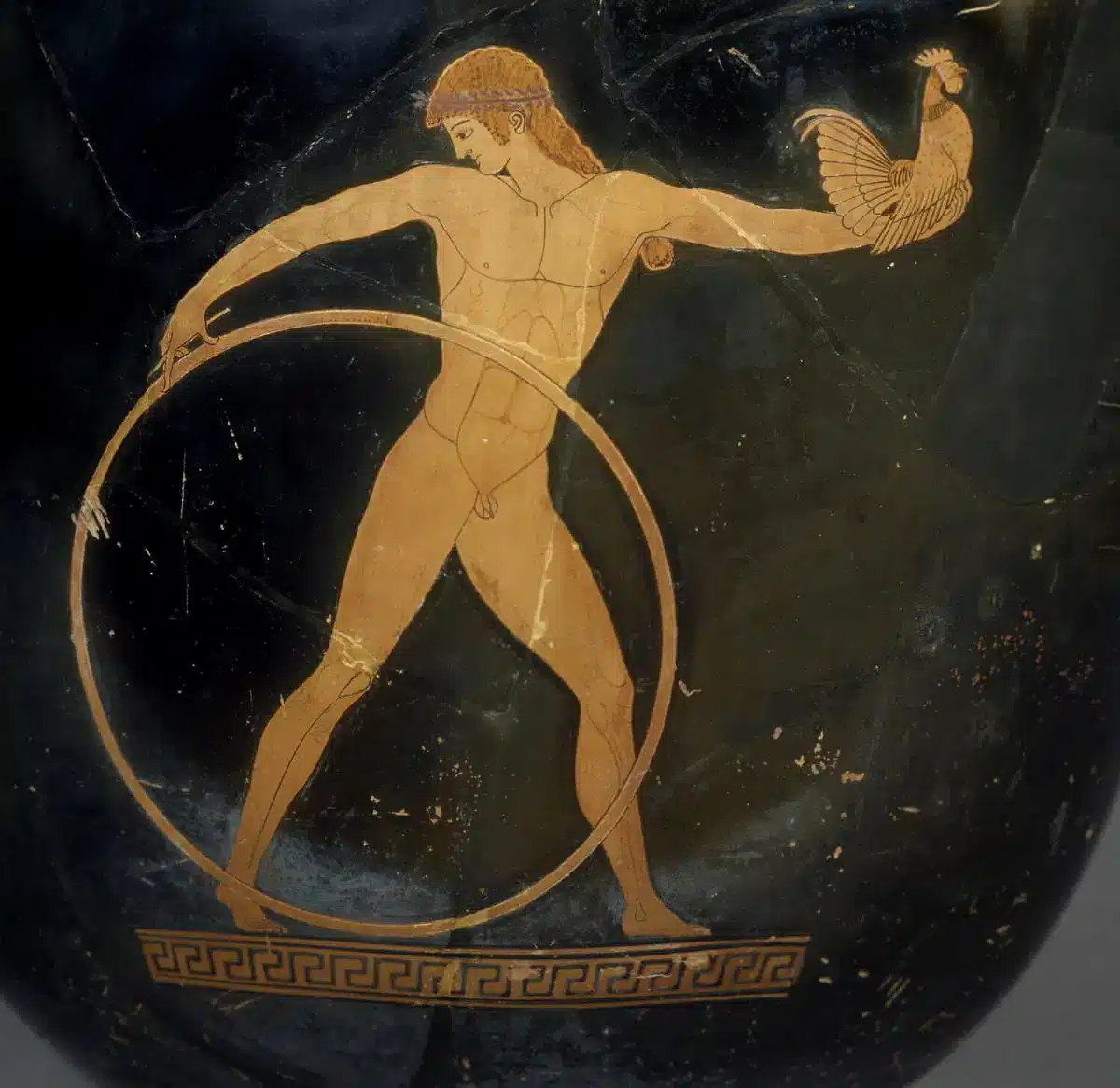
The use of hoops has been dated back to 500BC when the ancient greek children played with hoops for fun and adults would sometimes use hoops for exercise. This vase painting shows us Ganymede, a greek divine hero, holding a cockerel in one hand and a hoop in the other. The hoop is said to be a symbol of Ganymede’s youth.
https://commons.wikimedia.org/wiki/File:Berlin_Painter_Ganymedes_Louvre_G175.jpg

In the painting Children’s Games (1560) by painter Pieter Bruegel the Elder, many games are pictured including hoops in the bottom right of the image. In 14th centry England hoops were not only used as a game by children but perscribed to adults by doctors as a means to alleviate back pain and heart problems.
https://en.wikipedia.org/wiki/Children%27s_Games_(Bruegel)

Hooping is used as a form of storytelling for Native Americans. To them the hoop represents the circle of life, with no beginning or end. The dancers often use multiple hoops carefully constructed around the body to symbolise many different parts of life and sometimes taking the form of different animals. The hypnotic patterns of the hoops resemble mandalas and different forms of sacred geometry,whilst also symbolising life and creation, the hoop dance is a powerful aspect of Native American culture and is still practised today with annual Hoop Dance World Champisonships.*
*https://www.youtube.com/watch?v=GGzrF8LoHWs

Hoops are used within rhythmic gymnastics, acting as a prop to facilitate different gymnastics moves and dances, a famous example being Wendy Hilliard, the first African-American to represent the United States in rhythmic gynmastics in an international competition. Wendy’s own non–profit organization, the Wendy Hilliard Gymnastics Foundation, has provided free gymnastics for almost 25,000 children in NYC since 1996.*
*https://wendyhilliard.org/who-we-are/about-wendy/

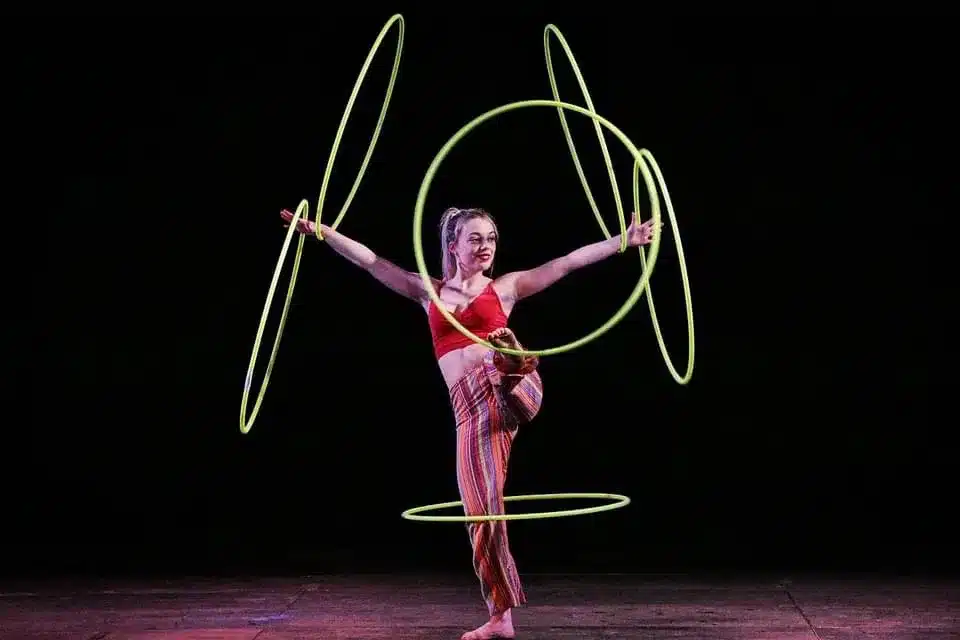
Hooping is also seen within the circus, acts containing multiple hoops spun across the body intertwineded with modern dance to create illusions, with influemces from both Native American hooping and rhythmic gymnastics.


Aerial hoop is another form of gymnastics or circus performance, where the dancer is suspended by the hoop mid-air. An interesting take on this is aerial spirals*, which can take many forms but create this magnificent illusion of movement, dance and gymnastics combined.
*https://www.instagram.com/p/C2DPM6EsCHV/


Different forms of hoop performance containing fire or LED light sources to compliment the flow of the circle and illuminate the hoops in the dark, common at festivals and parties. Fire flow arts is a whole categorgy in itself, with fire poi, dragon staff and many more flaming props delicately spun in the dark.
To me, hooping is something I picked up around 3 years ago, influenced by my sister and my cool circus friends. I was hooked on it from the beginning and fell in love with the flow state, learning new tricks and even playing with fire, I have found hooping to be really addictive and its one of my favourite hobbies. I am forever grateful for hooping and all the lovely cirus folk providing a unique community, especially since moving to Bristol as I have be able to experience this on a larger scale, going to the Eastville fire jams every few months and hoopgirl meetups once a week.
Circle Symbolism
Circles are one of the most universal shapes, everyone can look up to the sky and see two circles, the sun and the moon. The circle is a symbol of wholeness and eternity, forever flowing with no beginning or end. Circles have been significant throughout history within both religion and geometry; and most importantly to me: within nature. In this project I aim to find the connection between hooping and the sacred nature of the circle.
I initially wanted to focus my drawings around sacred geometry, fibbonaci spirals and euclids theorem but quickly decided that my art style doesn’t really align with the idea of doing maths whilst drawing ¯\_(ツ)_/¯
I have decided to redirect my focus to natural phenomenons within nature and link that into hooping, a sort of mashup between the human condition and natural phenonmenons.


Book Binding Workshop

This is the first book I made using a glue binding method with a dust cover, the process was quick and easy with a fairly decent outcome, I have since been using this sketchbook for roughs and note taking and it’s holding up well.
This is the second book I made which is just a simple 14 page pamphlet using a pamphlet stitch method and again with a dust cover, this is probably the least impressive outcome but has held up well also.

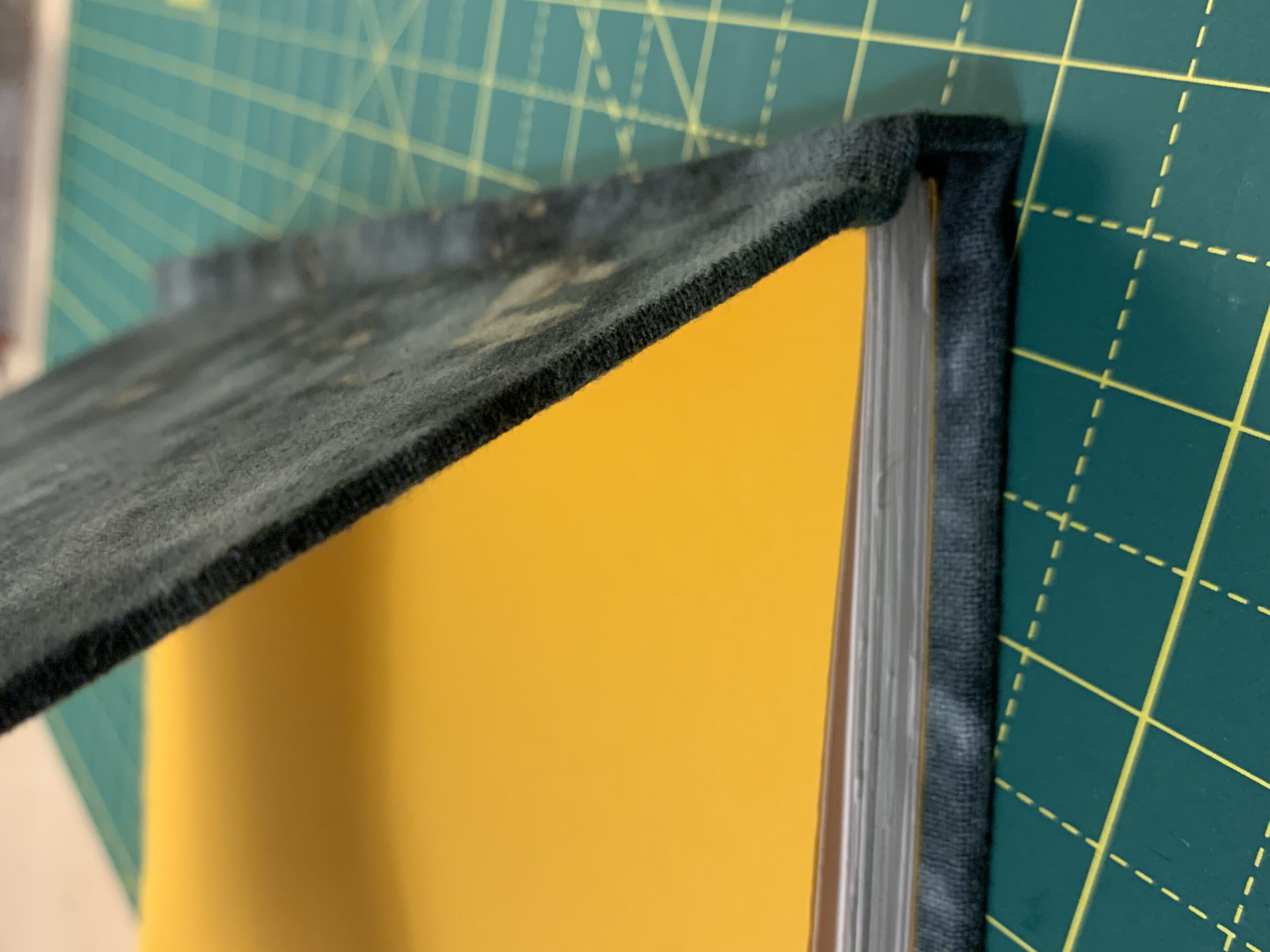


This is the double section coptic stitch hard back sketchbook which I think is by far the most impressive and I’m really happy with my outcome, I really enjoyed the process and personalisation with the coloured fly sheets and recycled fabric cover. This workshop was particularly interesting because it taught me a lot about different paper types and how the direction of the paper’s grain is useful to know when folding and sticking paper.
Here’s a better video of the hardback sketchbook, I am super proud of it and it made a lovely gift for my boyfriend as I used his old shirt for the fabric cover 🙂
I loved the process so much that after the second day of the workshop I went home and made another smaller book with the leftover materials, here’s a little process video timelapse on that.
Zine Workshop


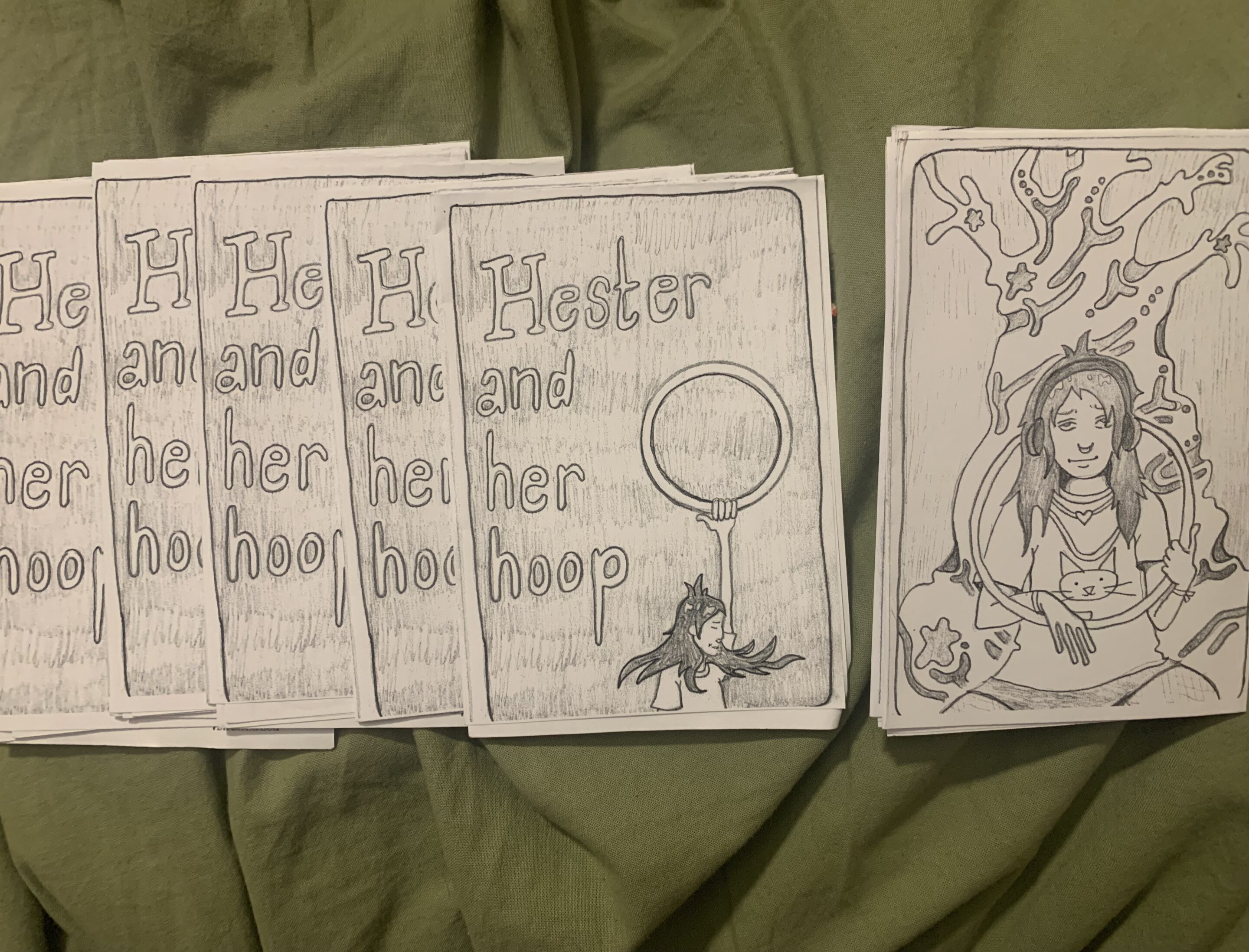
The zine workshop was super fun, useful to know how to quickly and cheaply reproduce little comics and its a process I will definitely use again in the future. This one was a single sheet of a3 paper which i then photocopied to cut and fold into an 8 page zine. My comic is a sequence of me waking up and going for a hoop in the park! This was a fun drawing exercise and I love drawing comics although its not something I do enough and this just reminded me my love for it.
Animated GIF Workshop
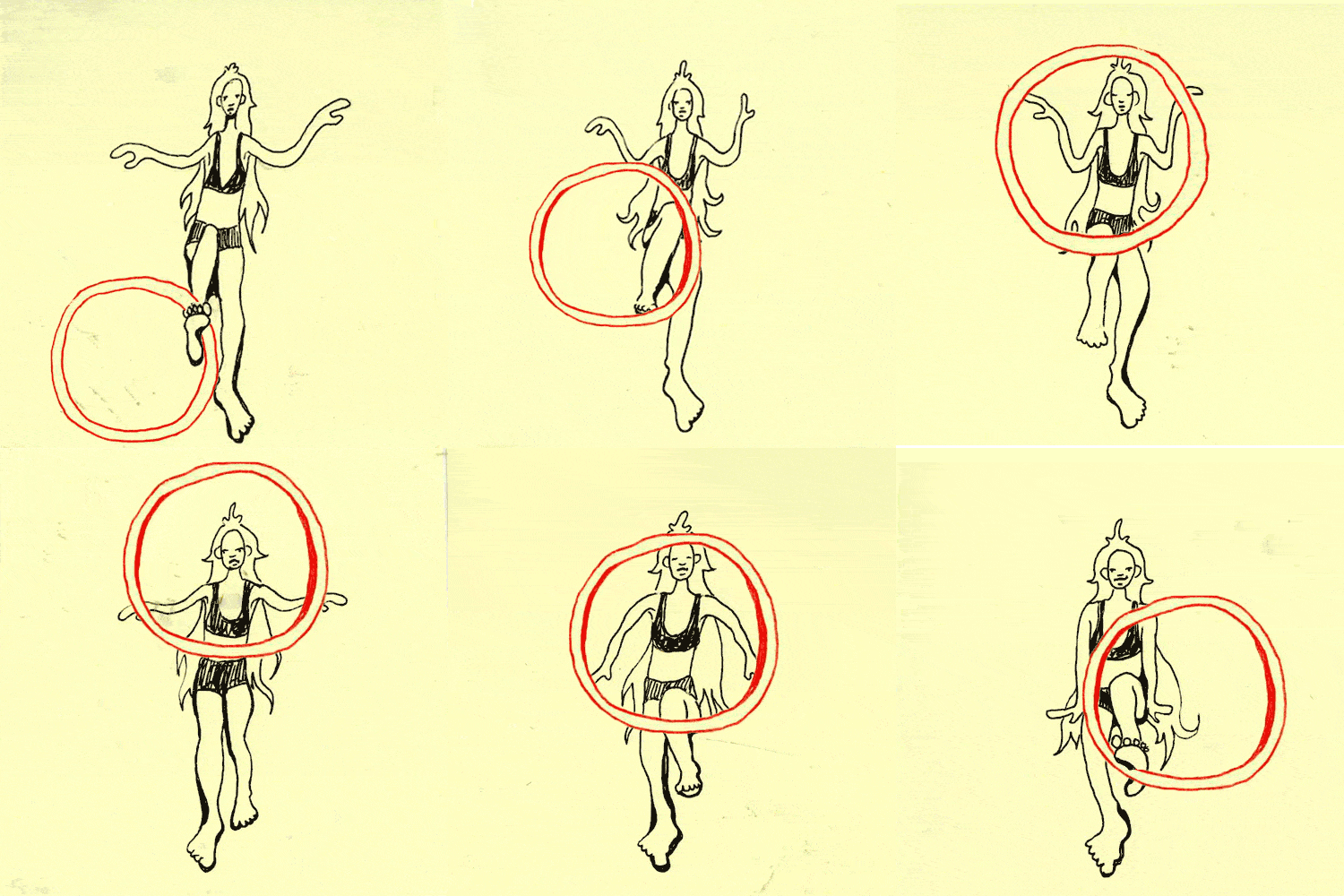
This is the first GIF I made for the workshop, I drew each frame on post it notes and I think the animitation flows nicely but I could’ve spend more time ensuring that the GIF loops and spend more time on the charater design as it was just a very rough and rushed sketch. On the right is the initial sketch and you can see my drawings to work out the different poses and how the figure changes with movement. I used a reference video of myself and I really enjoyed playing with the hoop and then studying that and how it looks, then transferring that into image sequences.


Here’s the second GIF I made of a hoop isolation sequence. As you can see I managed to successfully loop this one. I really enjoy the sketchy-ness and I think it almost aids the sense of movement between frames like an accidental motion trail. I’m having a lot of fun with these GIFs and I think they compliment my drawing style, I am already quite fond of figure drawing and this is just an extension of that when it comes to animating the way a body moves.
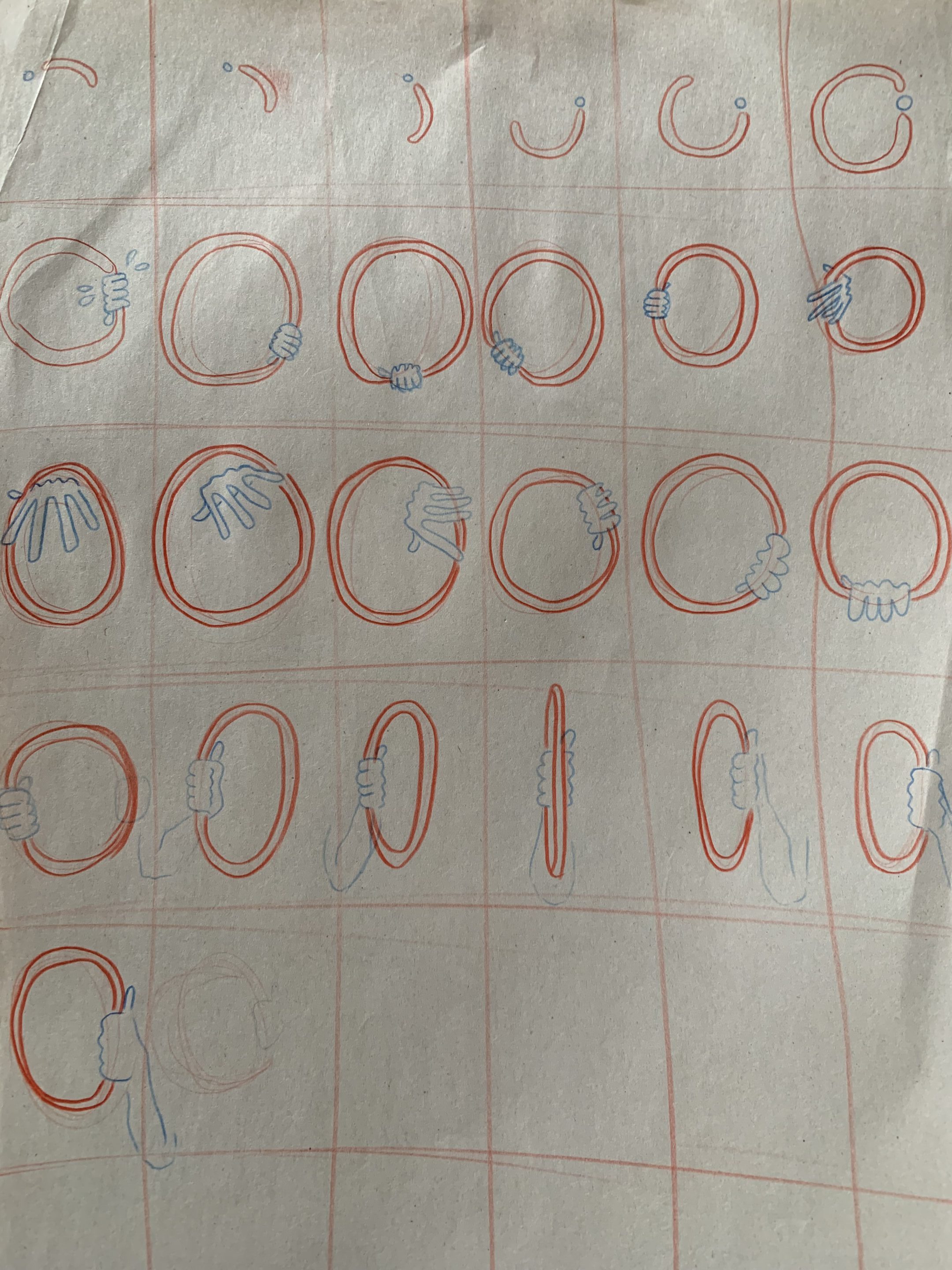

Here’s the supporting drawings for the gif above, figuring out hand placements and experimenting through drawing.
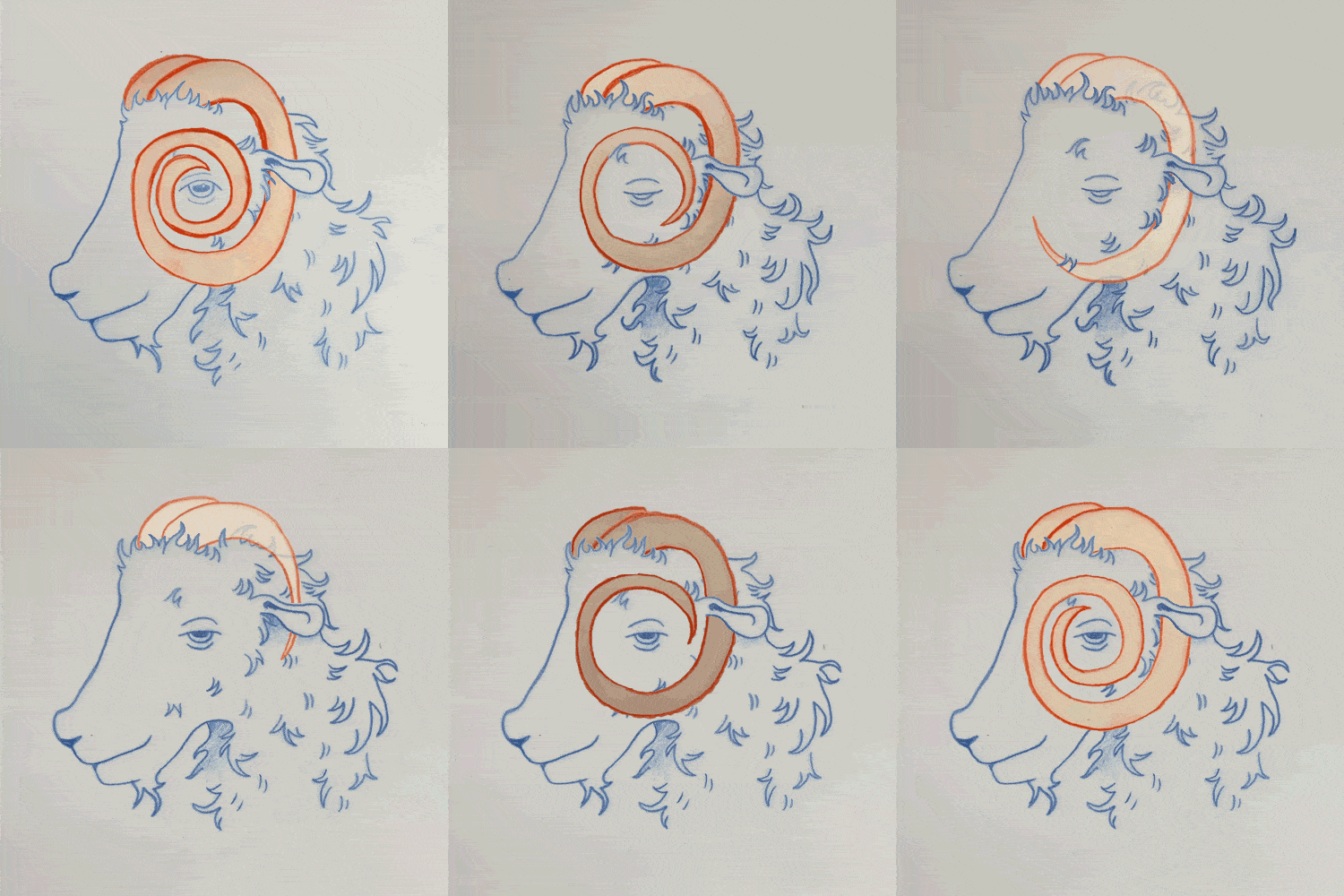
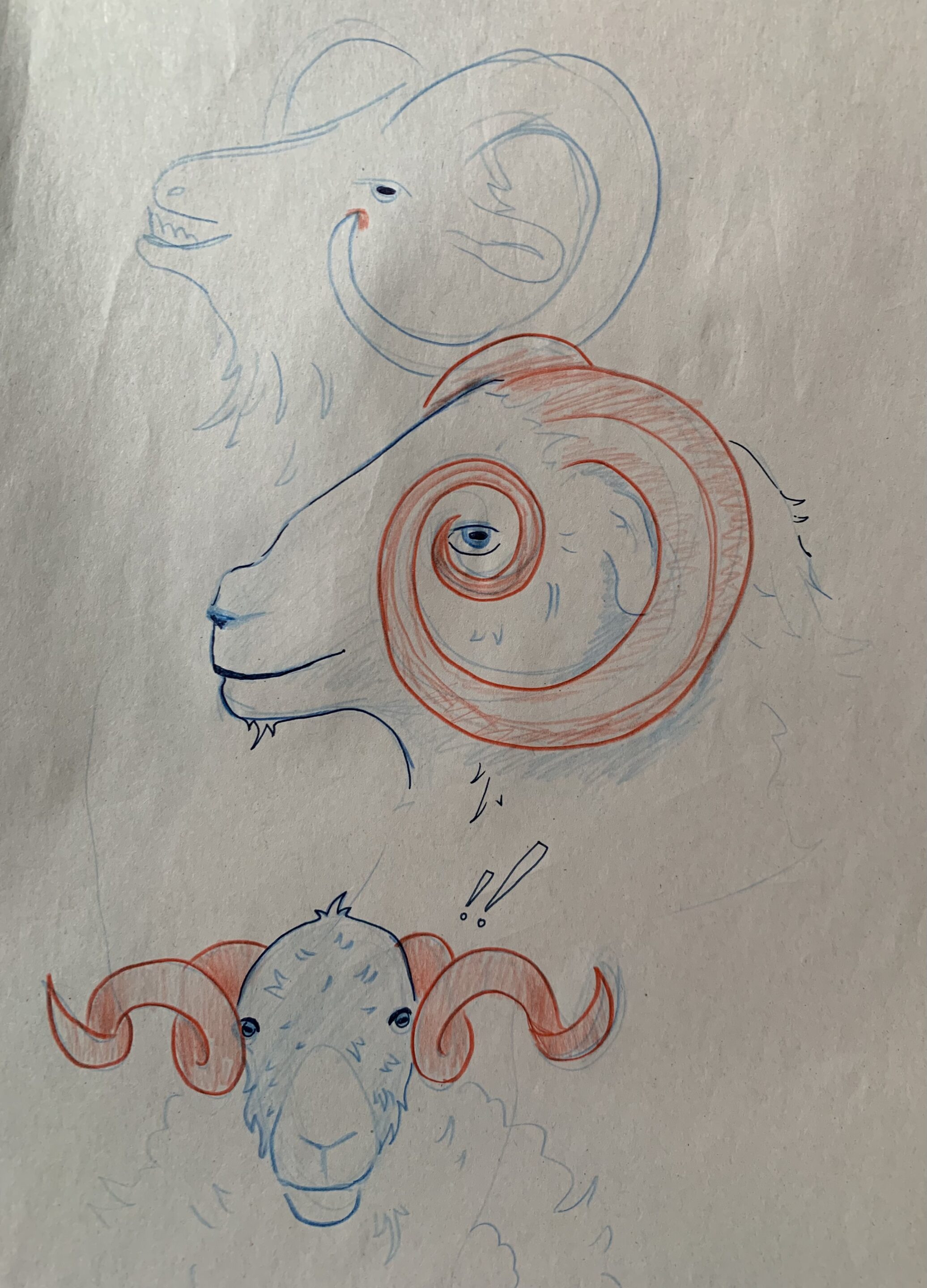

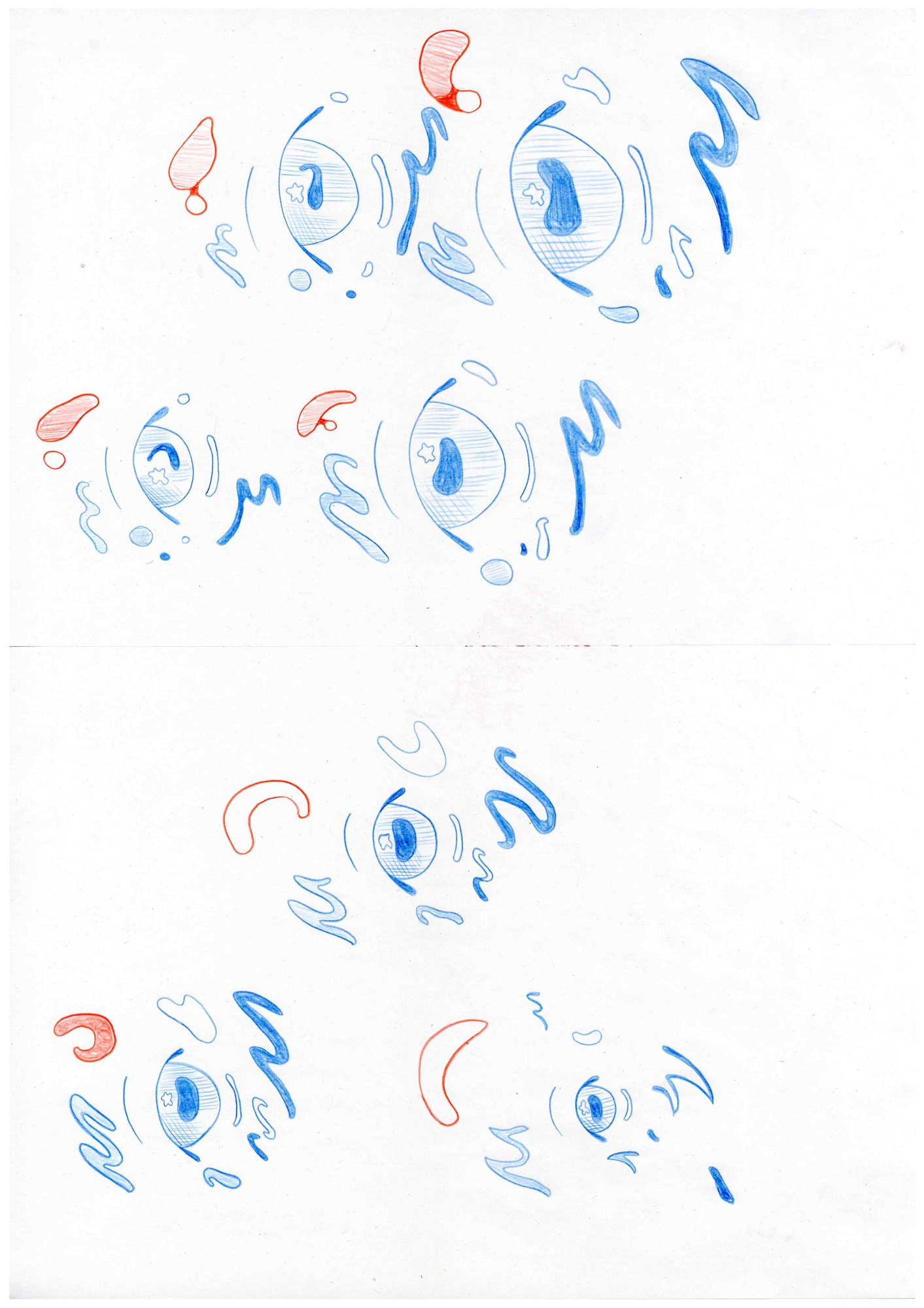
This GIF is inspired by the earlier image of the rams horn circling around its eye, originally I wanted to base it off the ram being impaled by its horn but decided to take a less morbid route as I feel my project themes are a bit lighter and I really love this outcome, I feel at this point I am getting a better grip of GIF animation using traditional drawing methods and digital editing on photoshop. I am also really loving the red blue colour scheme, I’m currently doing all my rough drawings with these red blue bicolour pencils and I think I might keep that colour scheme consistency as I work through the project. Also some parts at the end of the gif I forgot to turn up the opacity of the photoshop layer with the horns before merging the different layers which created this transparent effect on the horns which I actually really enjoy and I’d like to utilise this method in future gifs.


Here’s the drawings for the ram GIF, using tracing paper this time for better frame consistency, the drawing was the fun part but cutting out all the different sequences of the horns and then merging them with the ram drawings using photoshop was incredibly time consuming but I think the outcome is worth it.

I am really happy with this one, I think I nailed the complicated hand and body movements for this already complicated isolation hoop trick, only recently did I master this one on the hoop so it was really nice to study the movements again from an illustrators perspective rather than a hoop dancer. Also I added the stripes on the hoop to show the hoops movement otherwise I found it to be a bit static compared to the stripes circling around. My criticism is that I don’t like the style of the character and I know I can definitely spend more time perfecting a more personal character design to act in these animations.
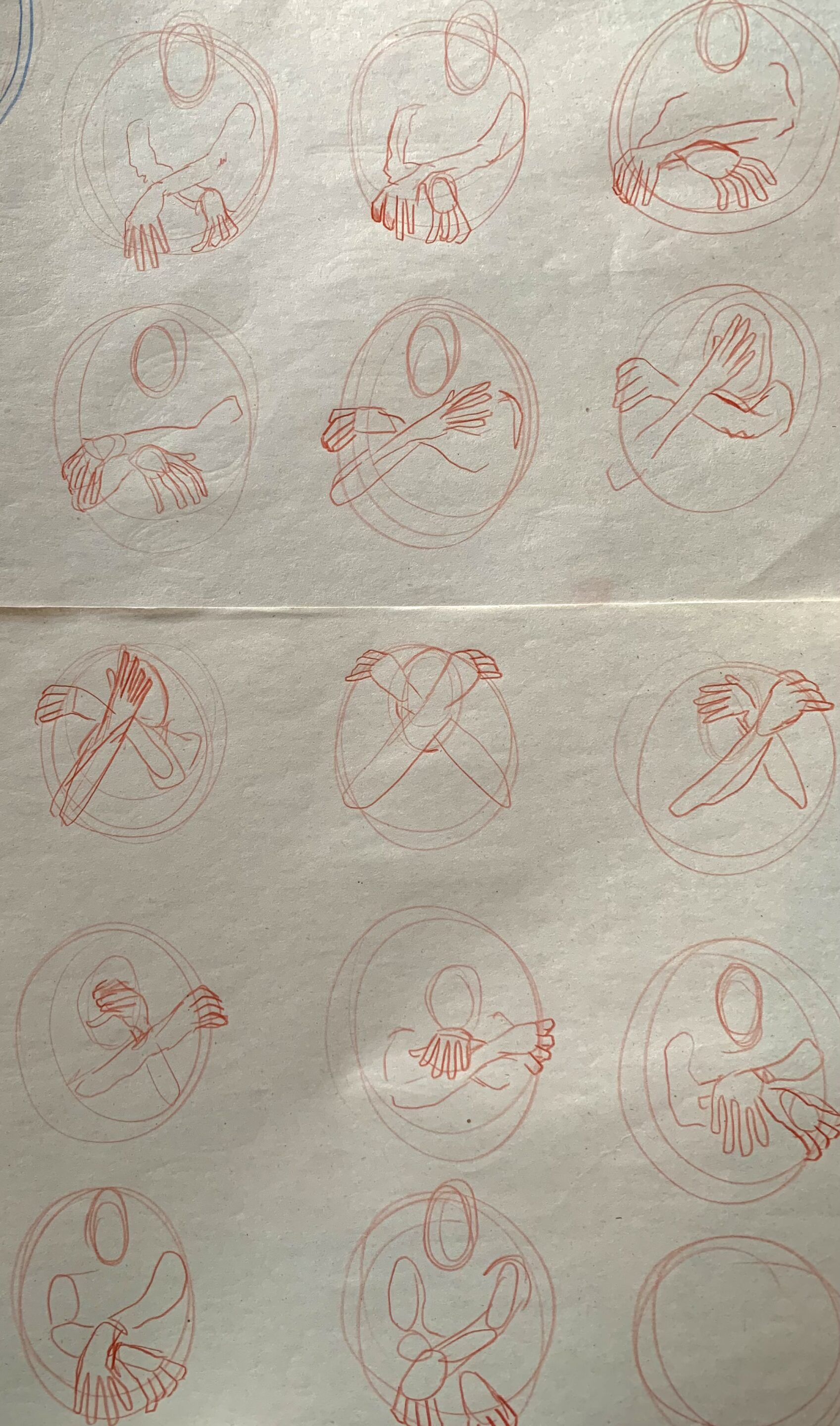

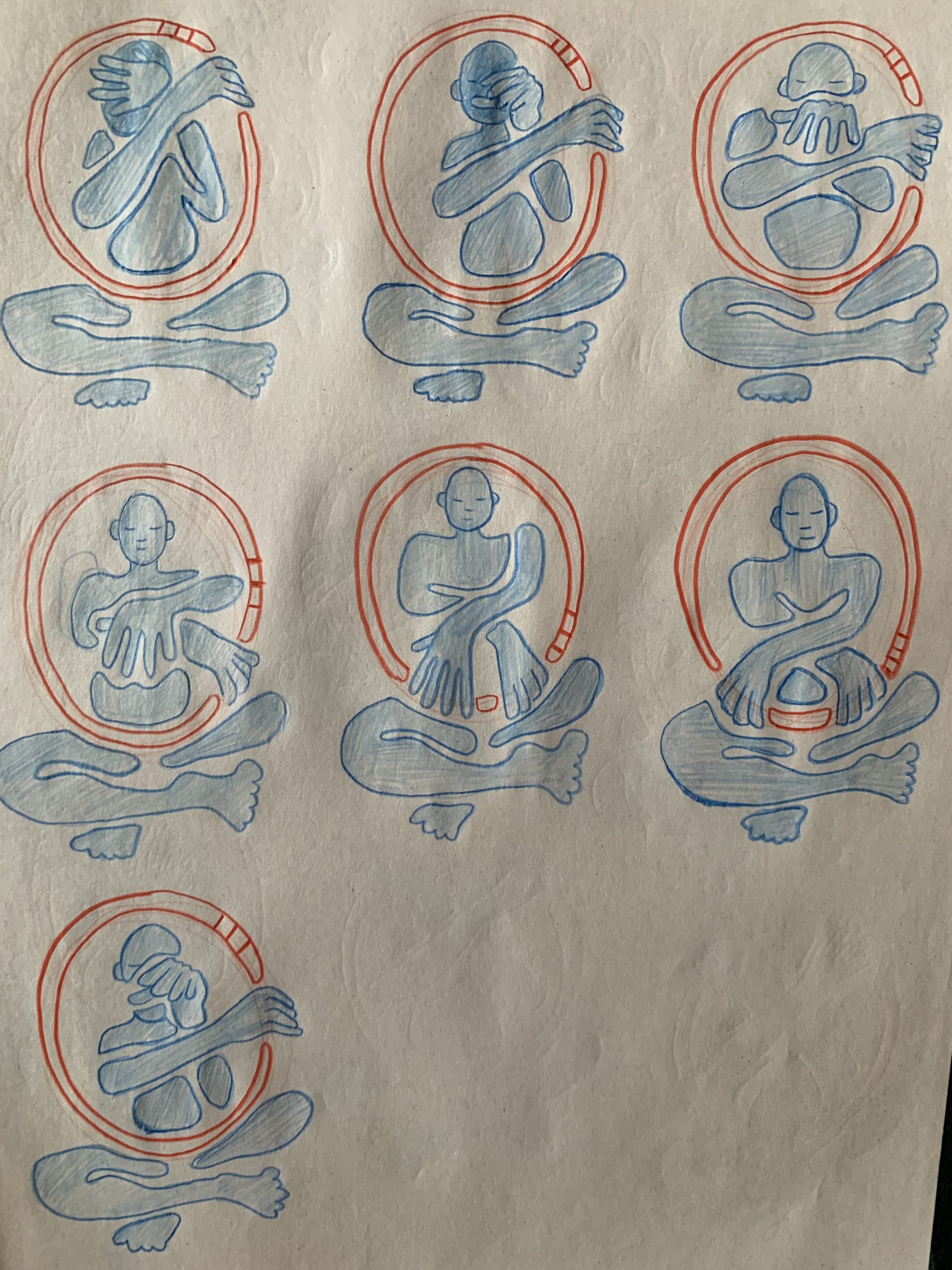
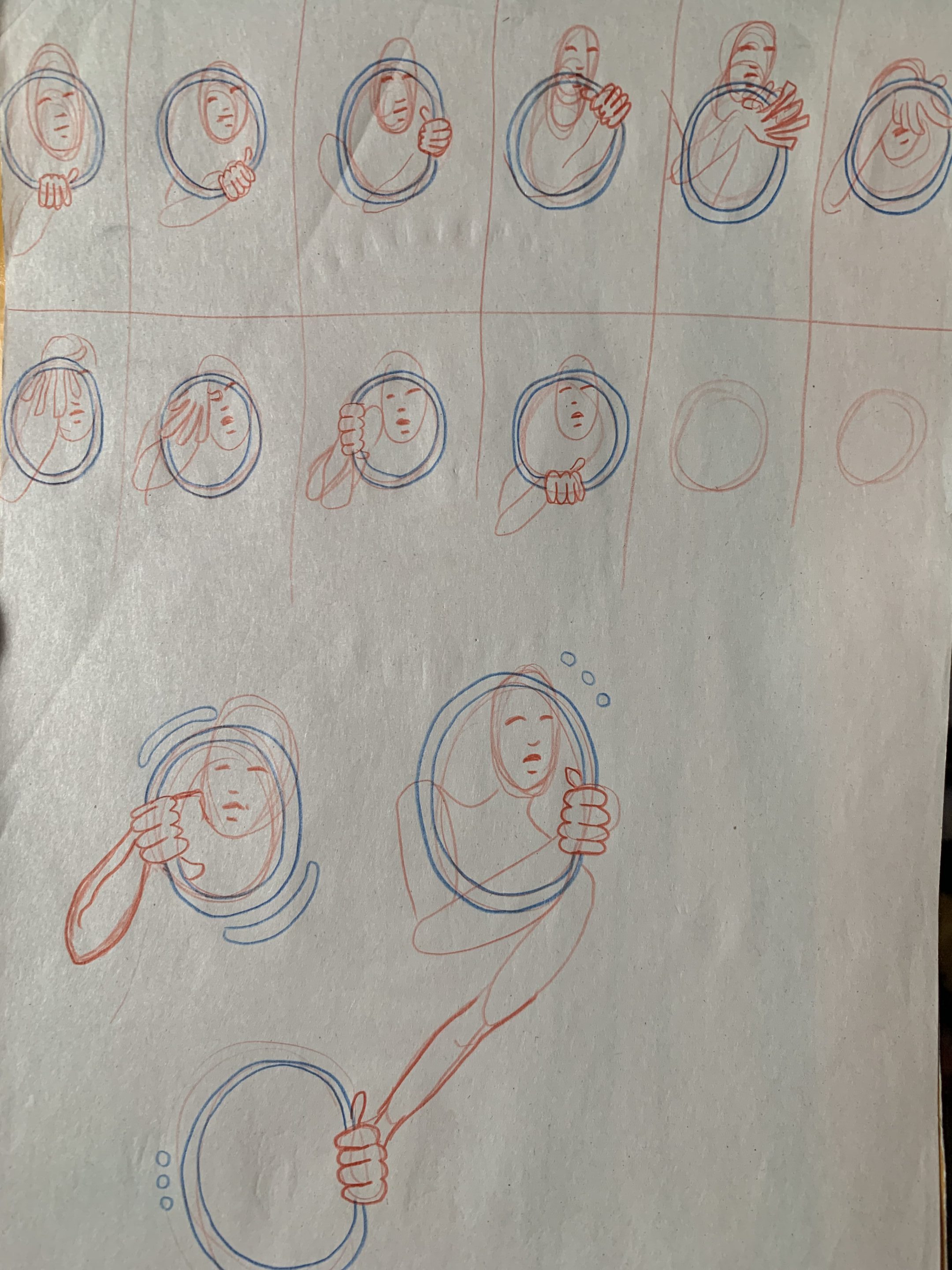
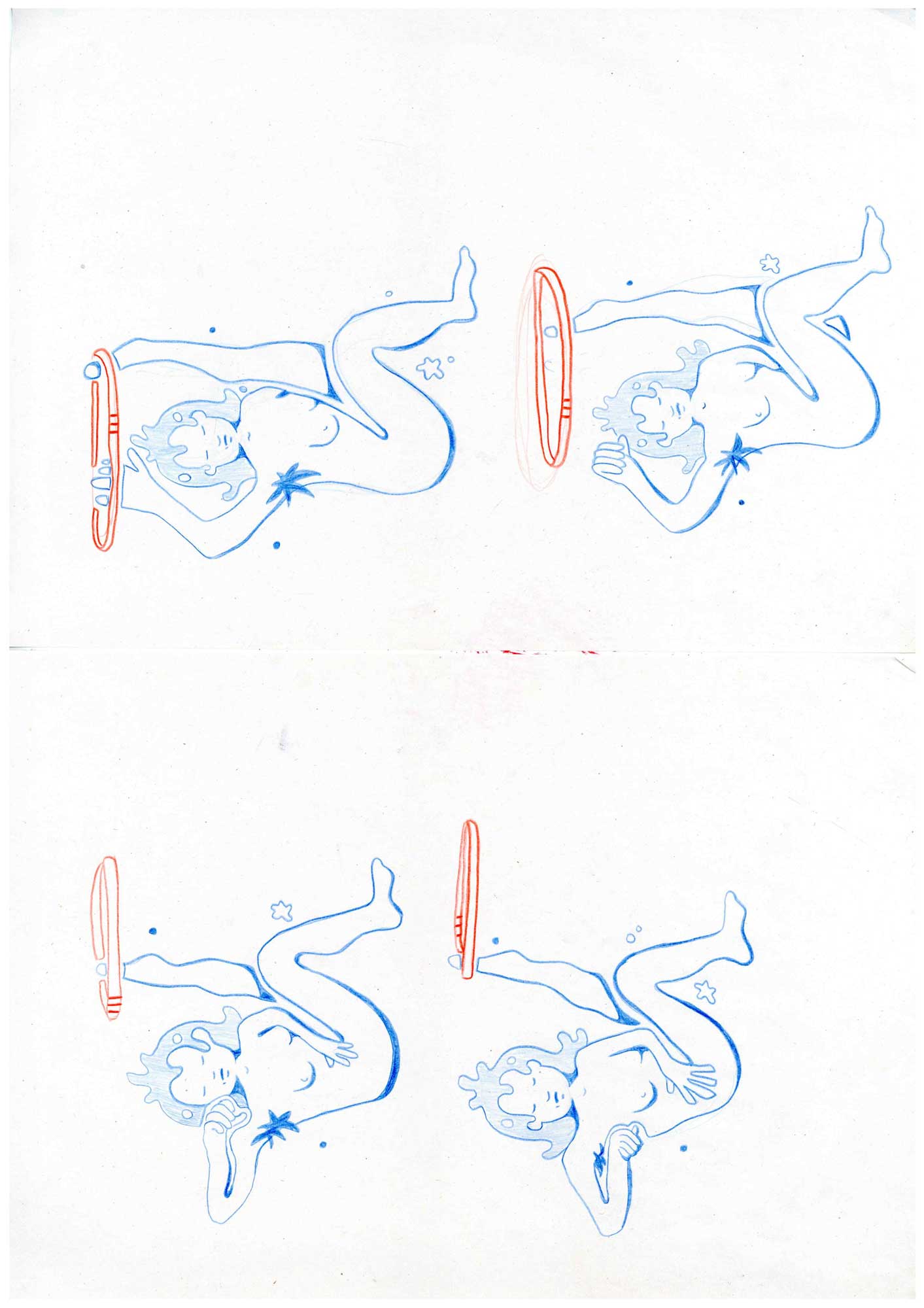
Here you can see me working out the sequences and figure movements, hands are tricky but this was good practise.
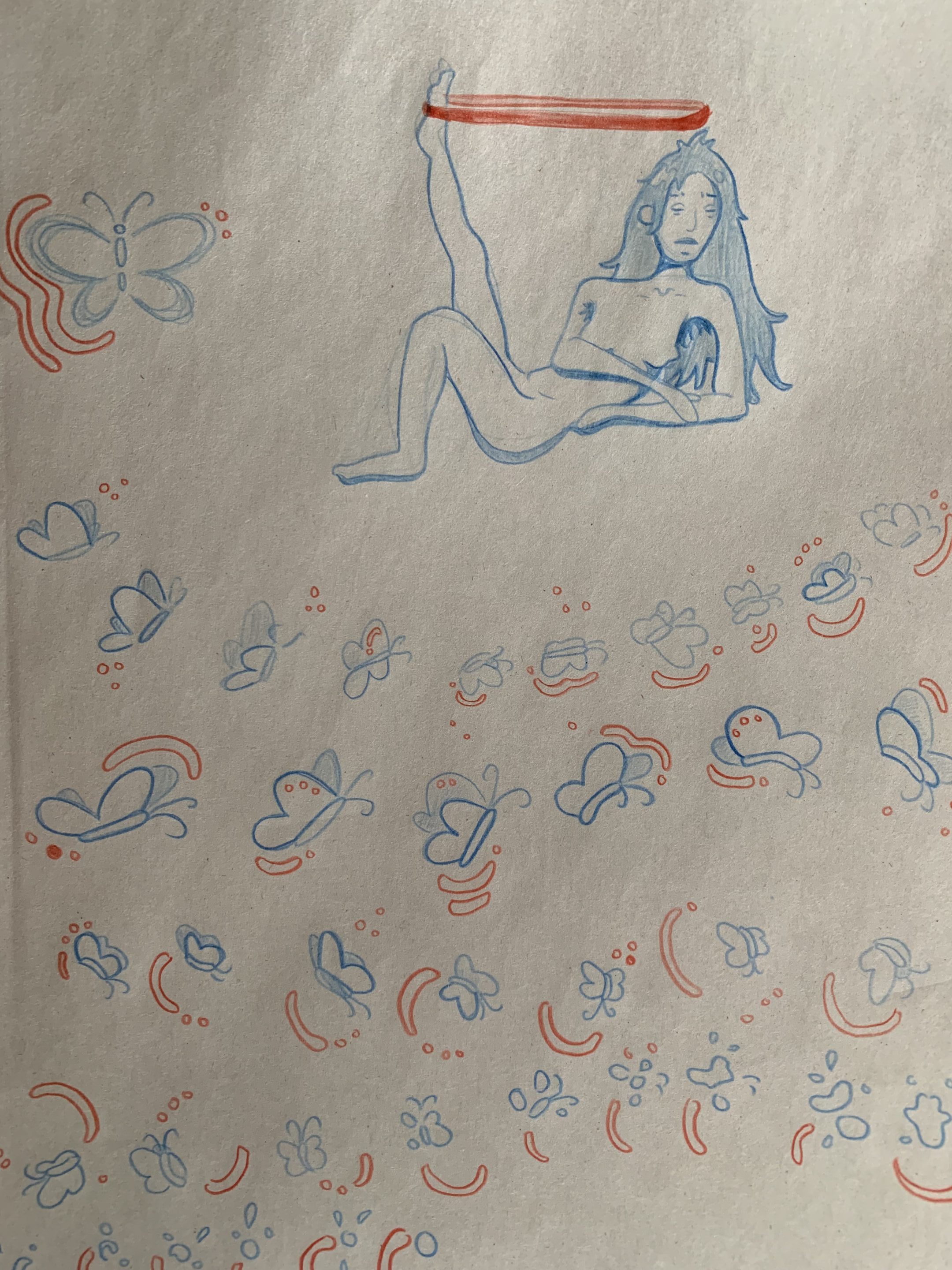
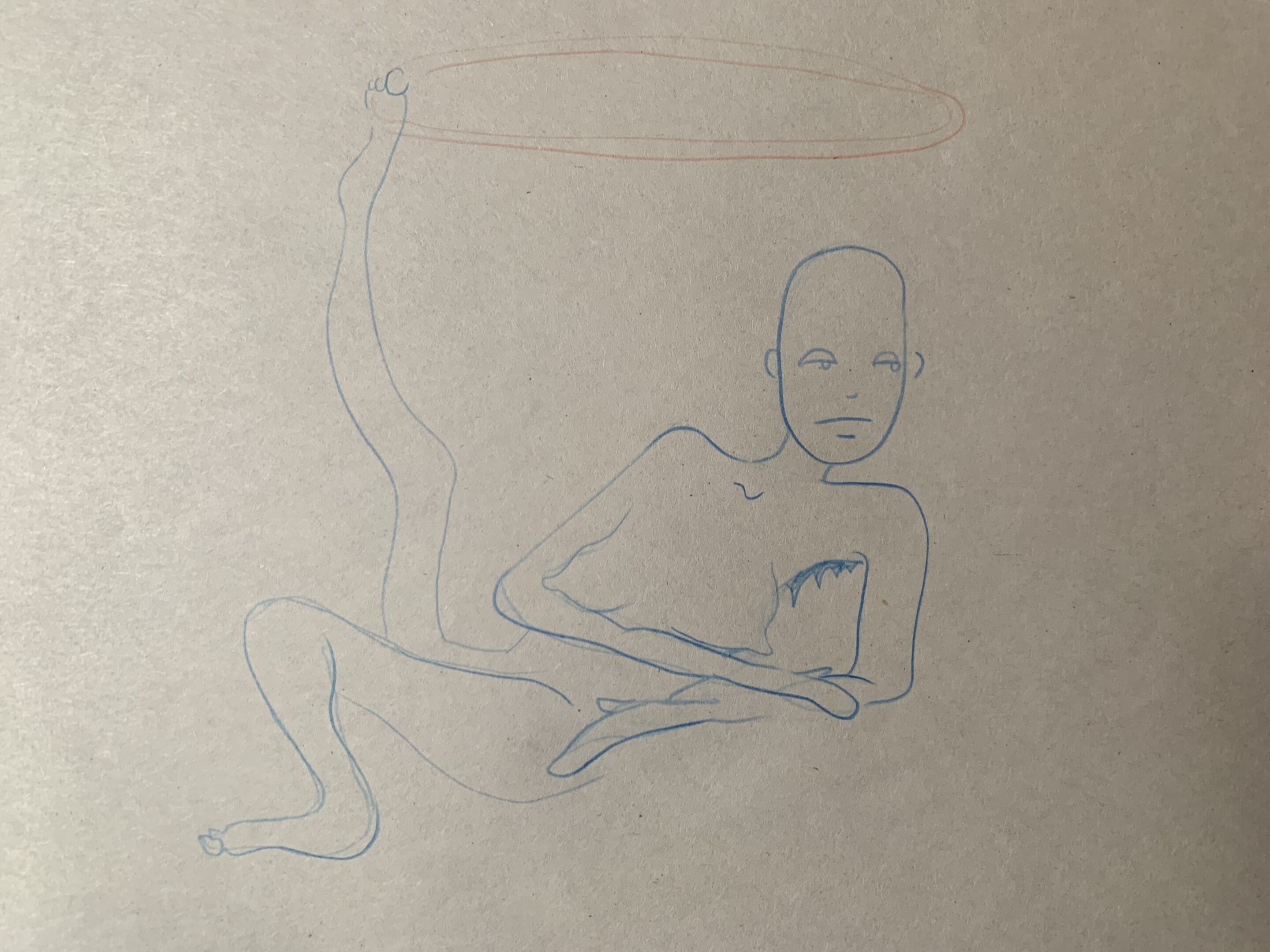
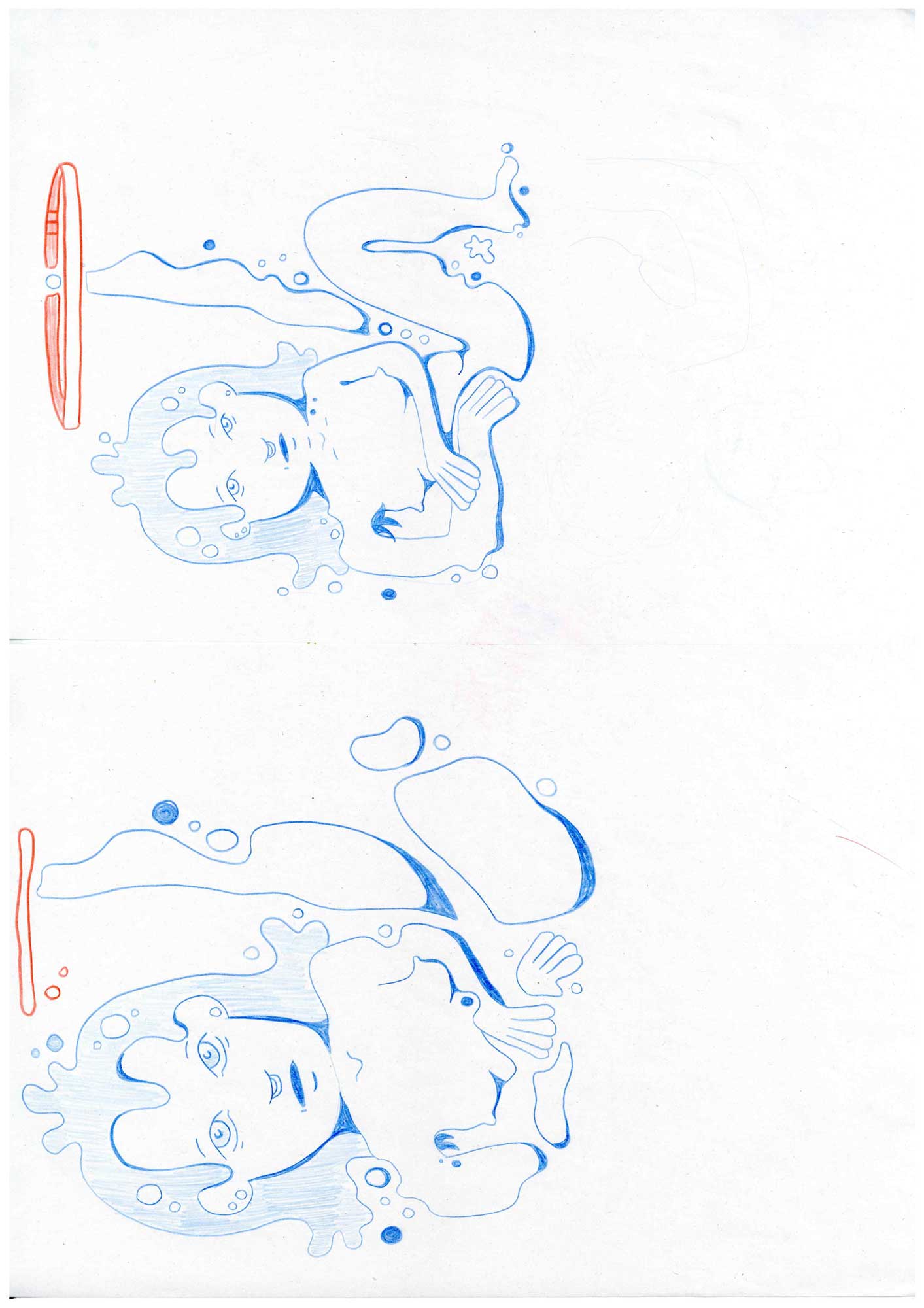
Here are some roughs for the next gif, refining the character design before committing to the animation, loving the personalisations of the more refined character on the left, hairy armpits and all.
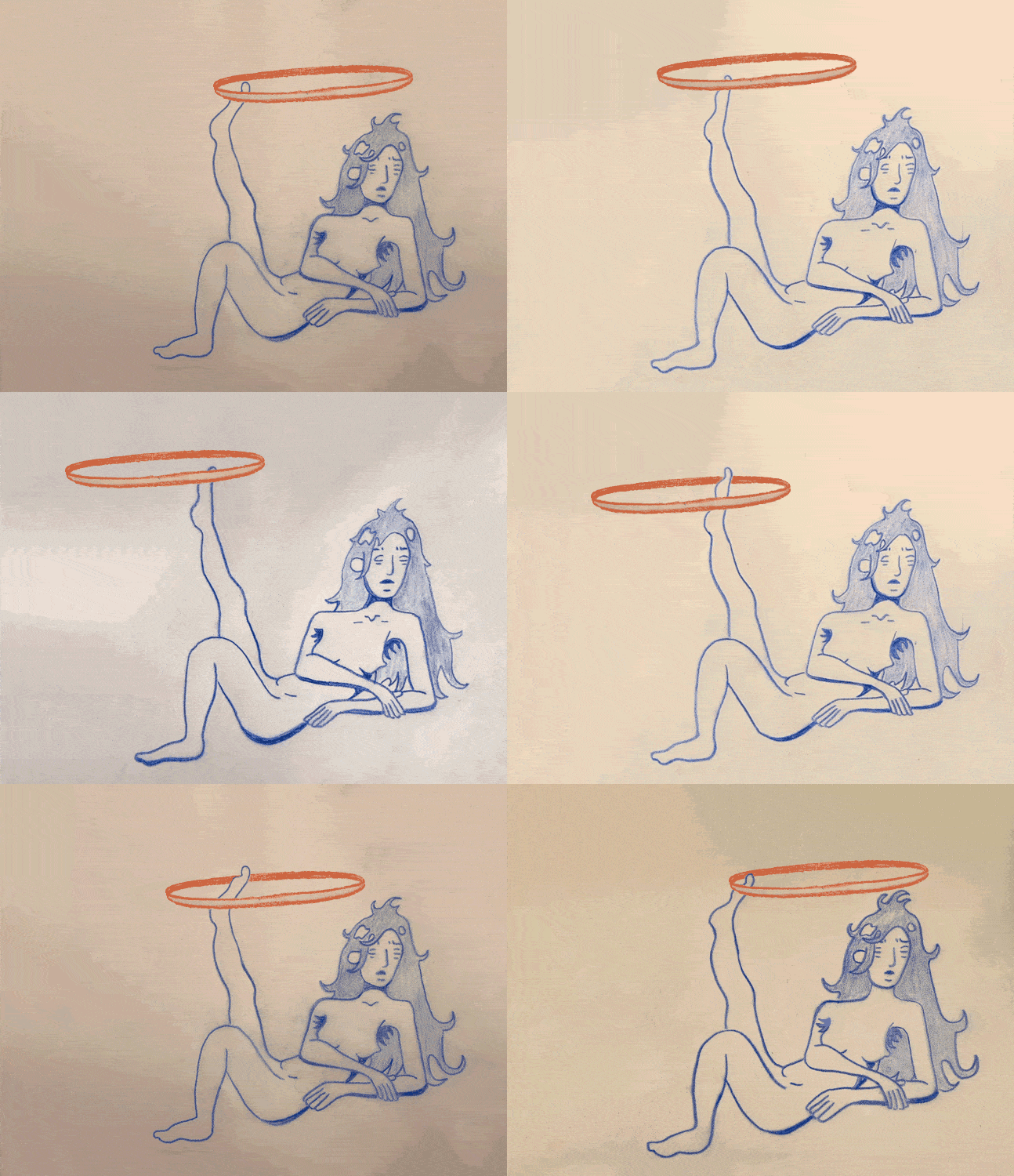
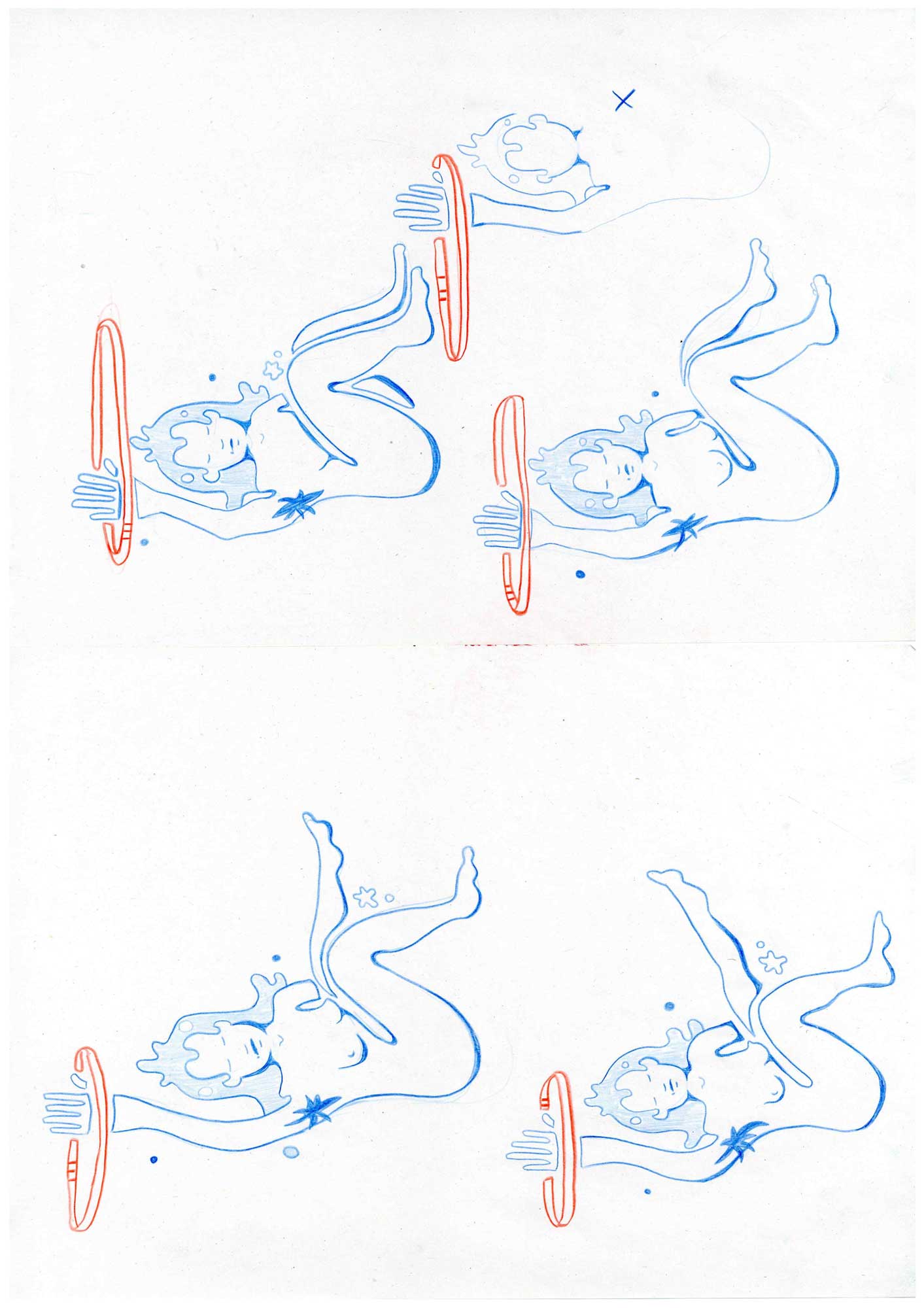
And here’s the outcome for that one, I animated the hoop and the character at a different quantity of frames per loop as I felt like the hoop needed more frames to become more flowing and representitive of real life. I really like this one and i’m starting to see some progress in these animations and my confidence with sequence drawing.
Crit notes and reflections
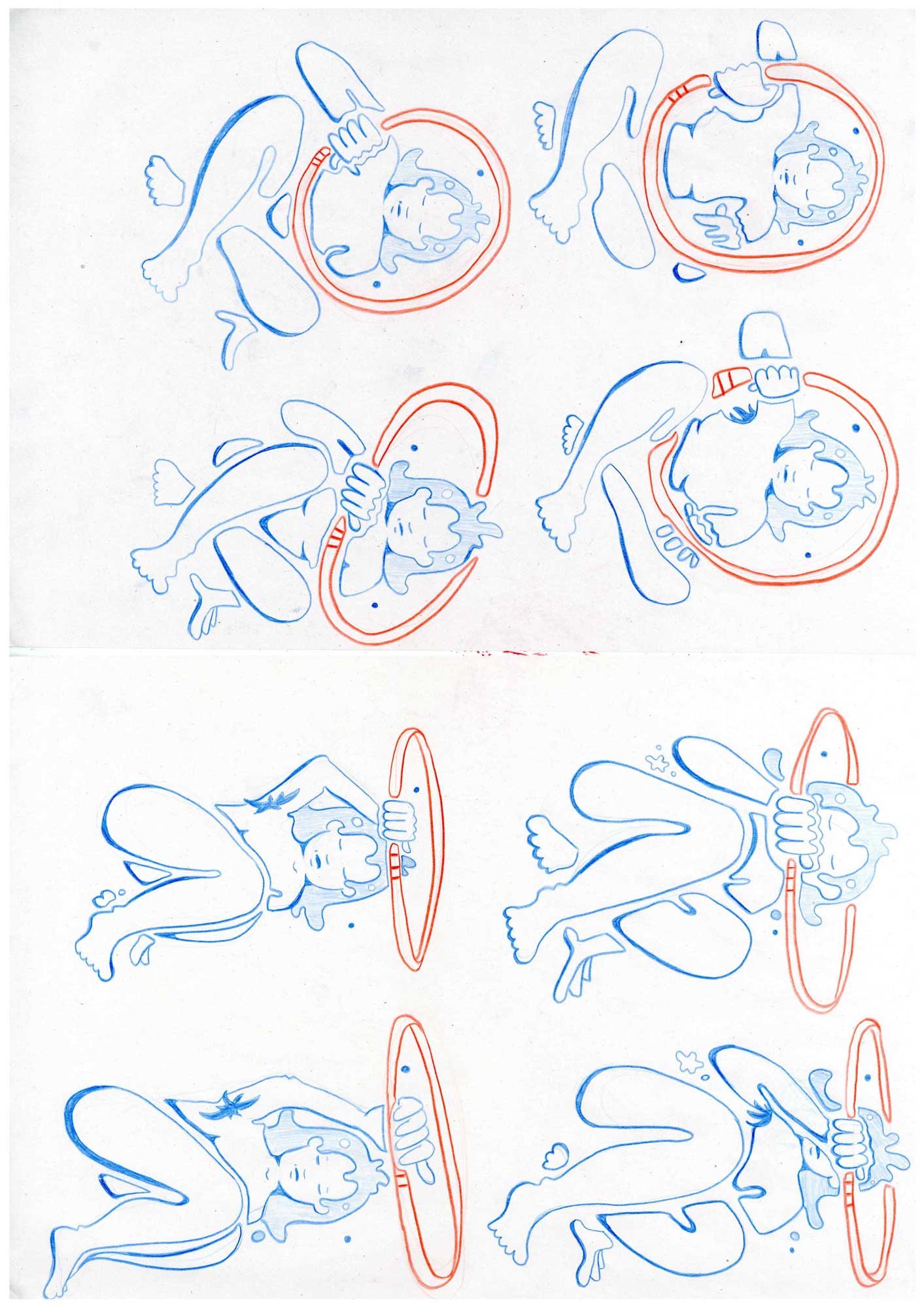
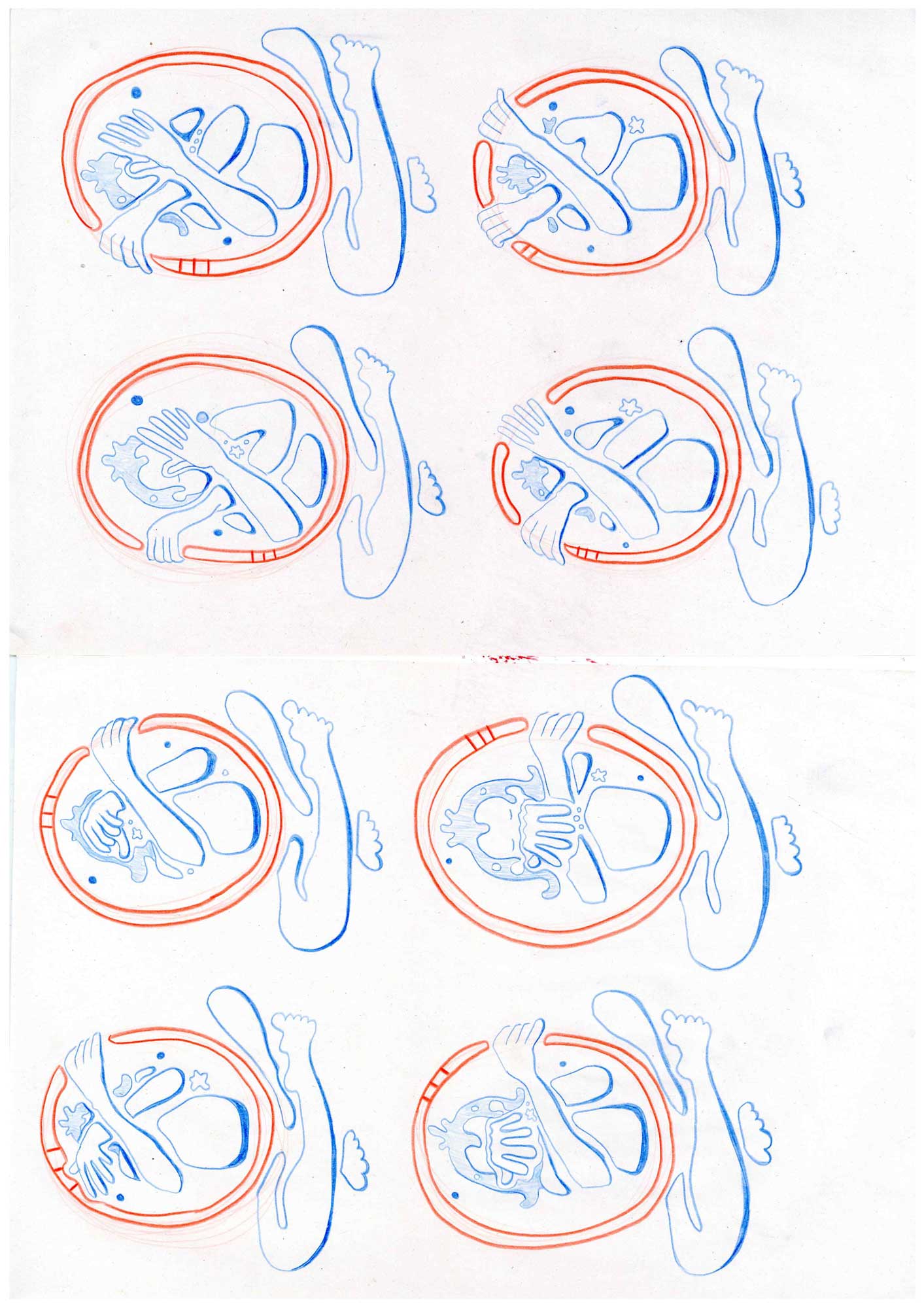
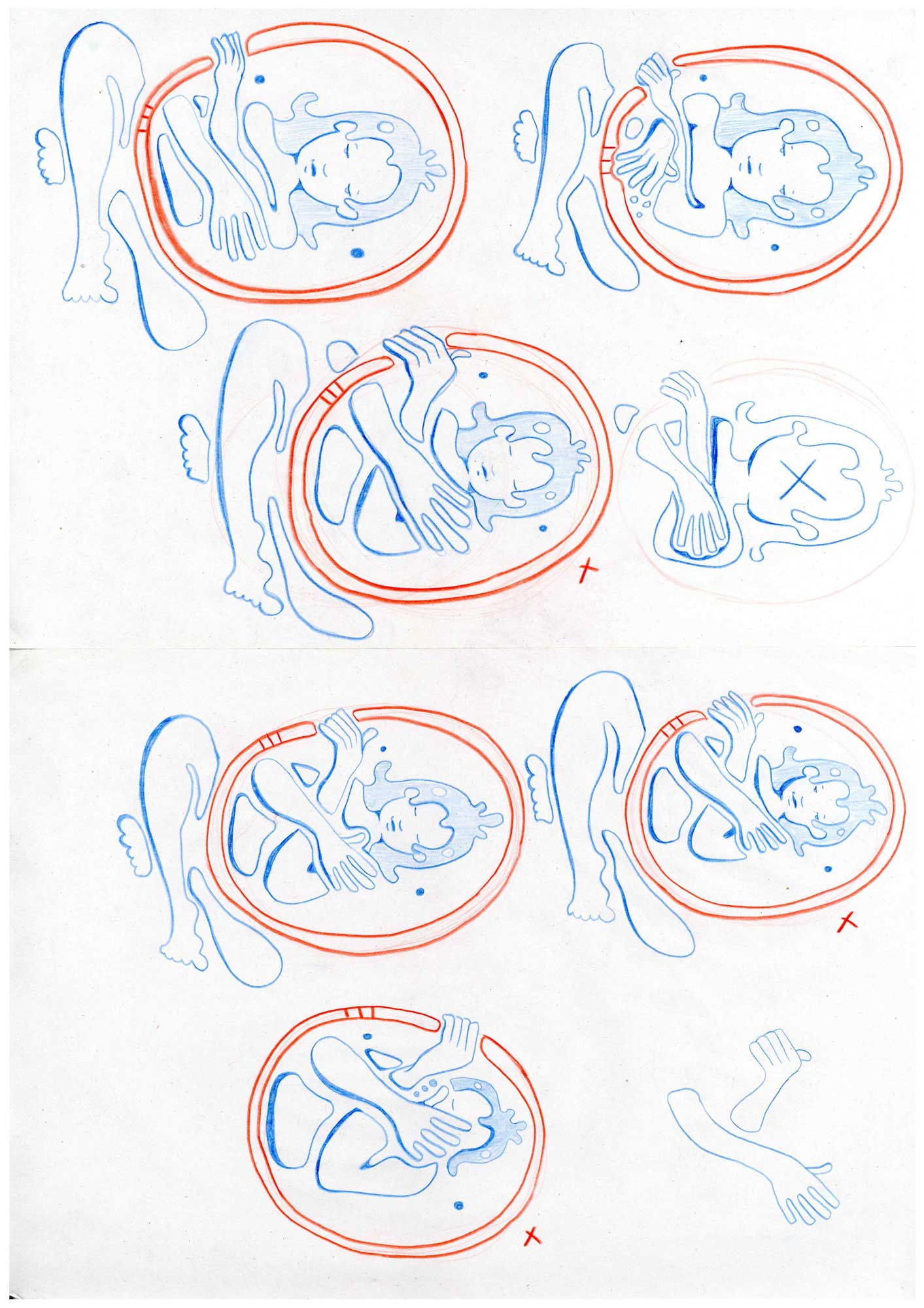
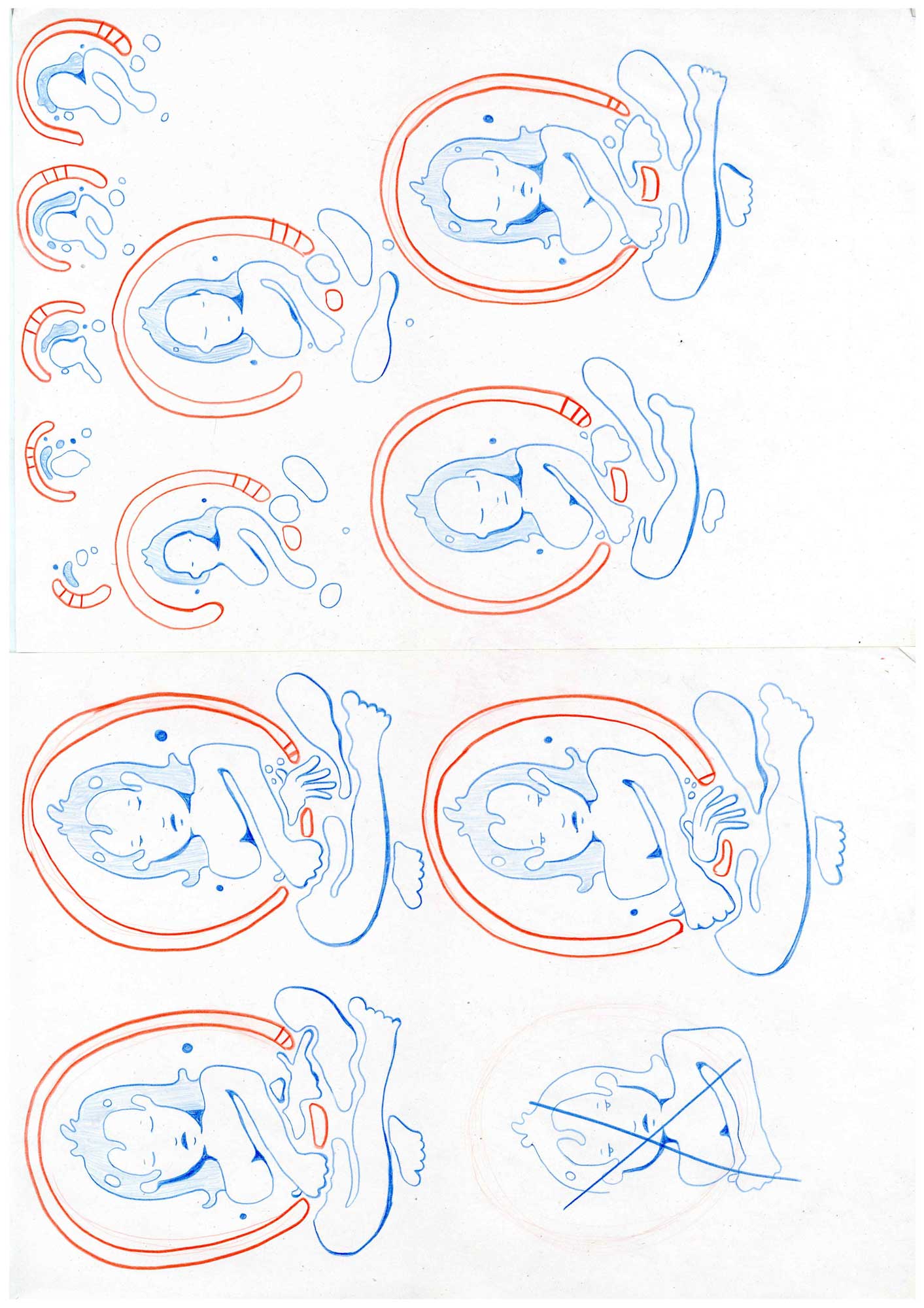
Since a few tutorials and much consideration I have decided to go down the route of sequence drawing in order to create an animation similar to the looping gifs, but with a narrative that connects my themes of both hooping and nature. I would like to blend this idea with book binding methods to create a physical copy of the animated sequence/short in the form of a flipbook! Although currently I am running out of time to print and I might have to settle on just the digitalised animation as my final outcome. I am feeling very inspired by the sequence drawings and all the workshops I attended and I am looking forward to refining and finalising my work into an outcome I can be proud of. Jonathan set me the task of trying to make as many gifs as I can in order to improve my skills with digital editing and sequencing and explore/ experiment with drawing frame by frame animations. I think I’m at a place now where I have enough drawings and ideas to begin drawing for my final animation sequence, maybe recycling some of the best bits from the gif outcomes as well.
Random Roughs

striped hoop idea to show movement of hoop during animation/create a better illusion
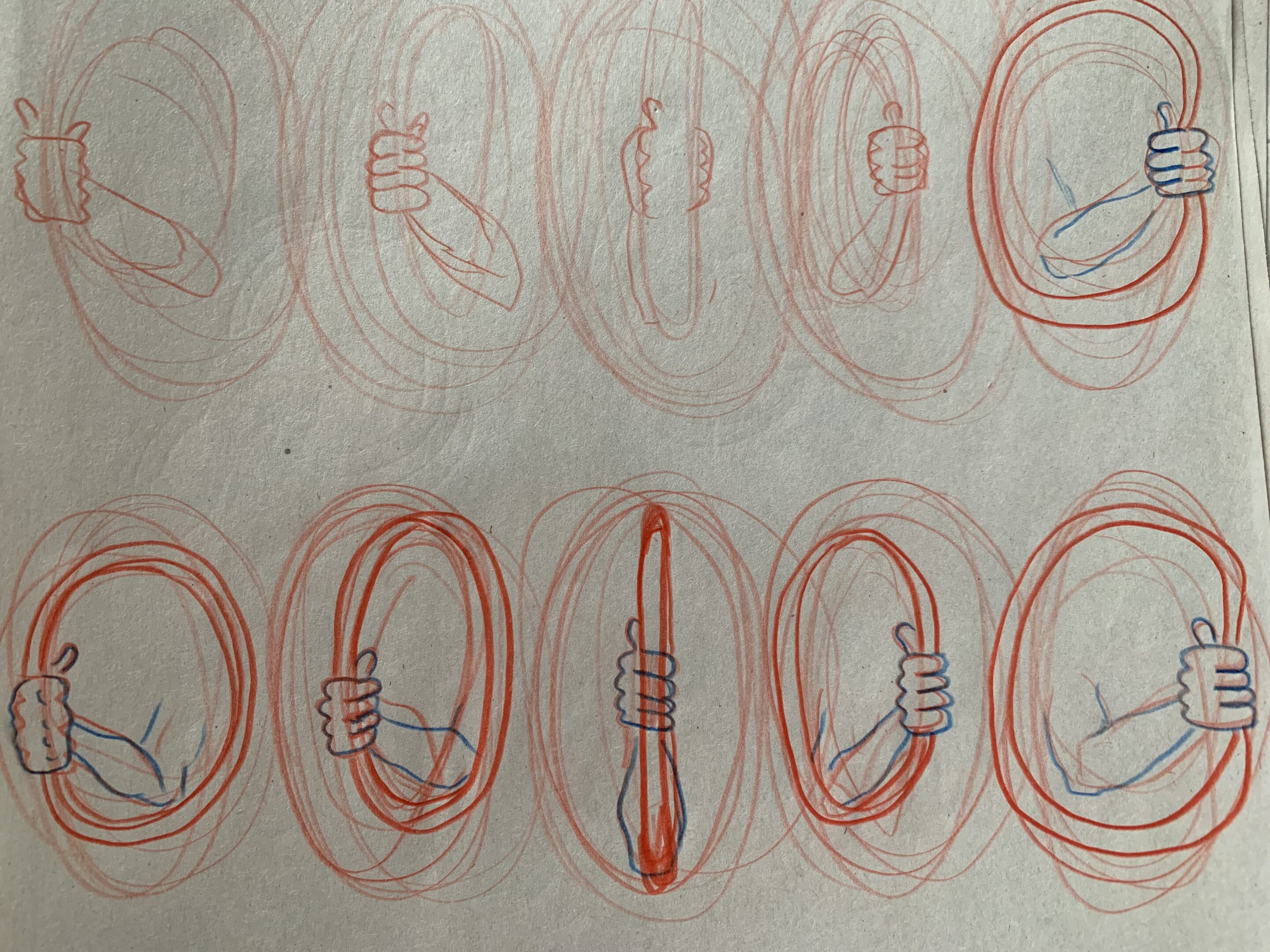
hoops and hands

transition from hooper to ram with a zoom effect
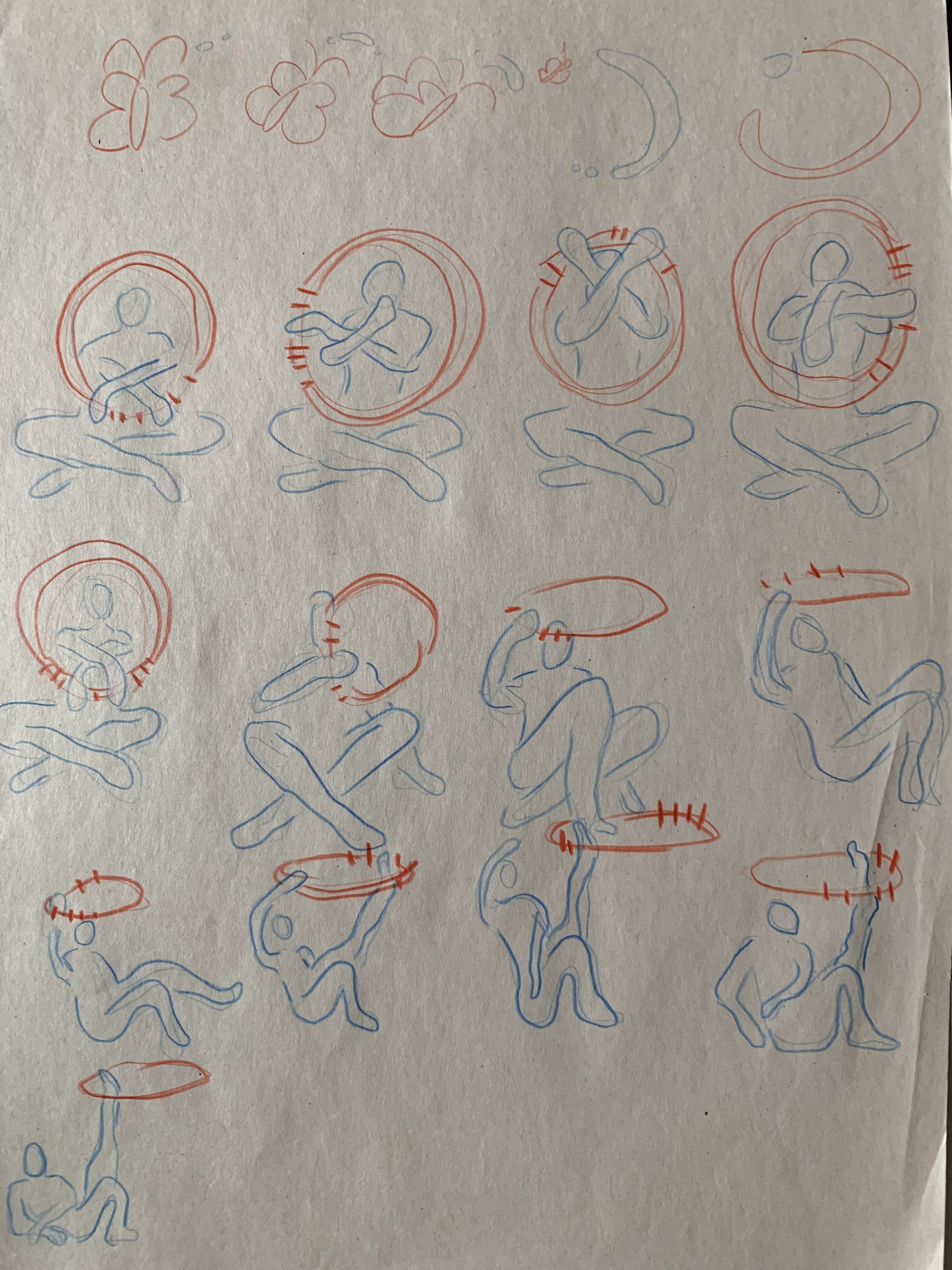
working out movement sequences between hoop tricks
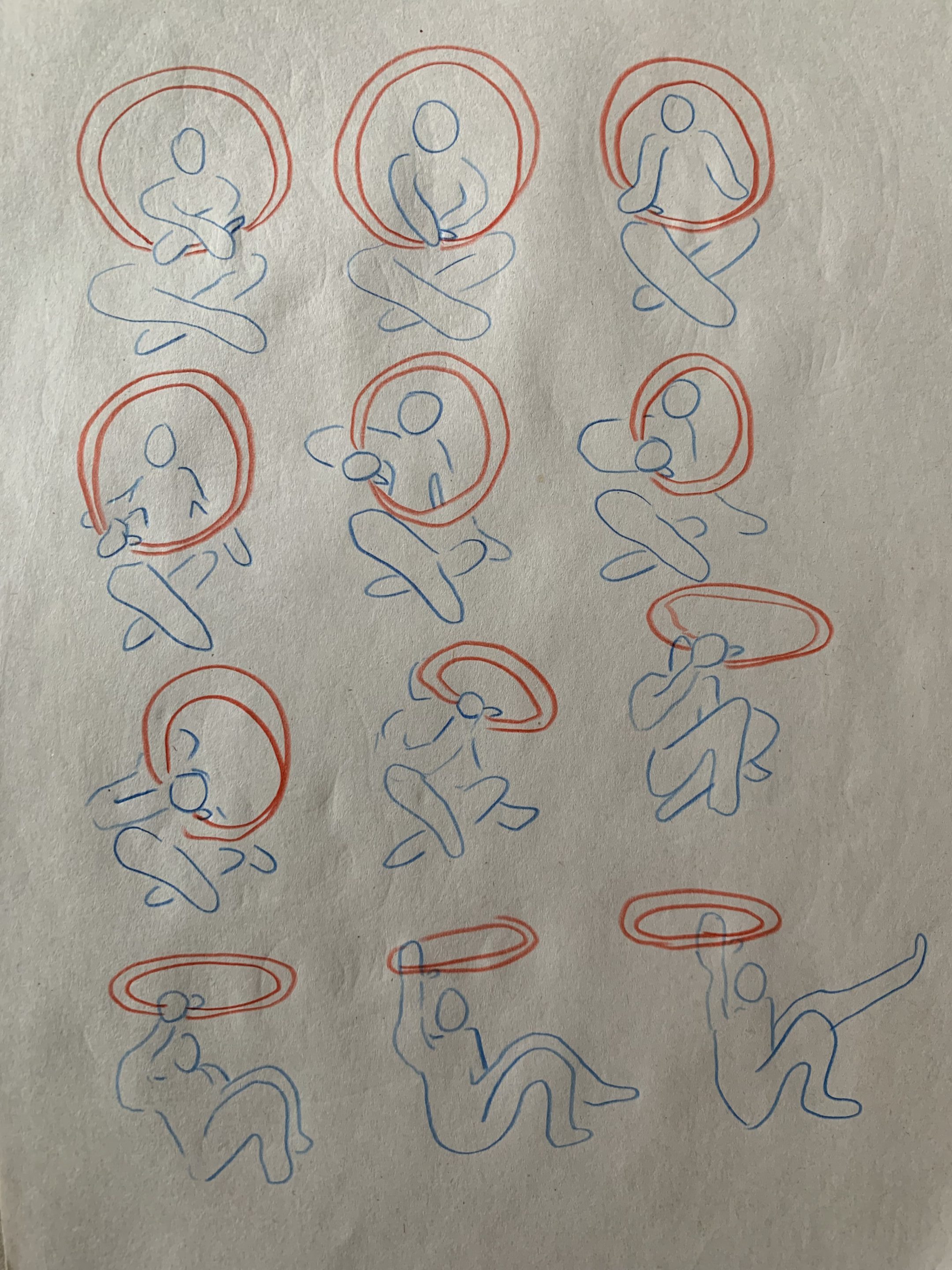
more figure drawing between hoop tricks

flower hoop morph idea
Refined Drawings

img20250312_20481678
img20250312_20195786

img20250312_20191837

img20250312_20183982
img20250312_20175860

img20250312_20171524
img20250312_20163052

img20250311_19370435
img20250311_19363315
img20250311_19355440

img20250311_19351716
img20250311_19343537
img20250311_19335947
img20250311_19332535

img20250311_19322631
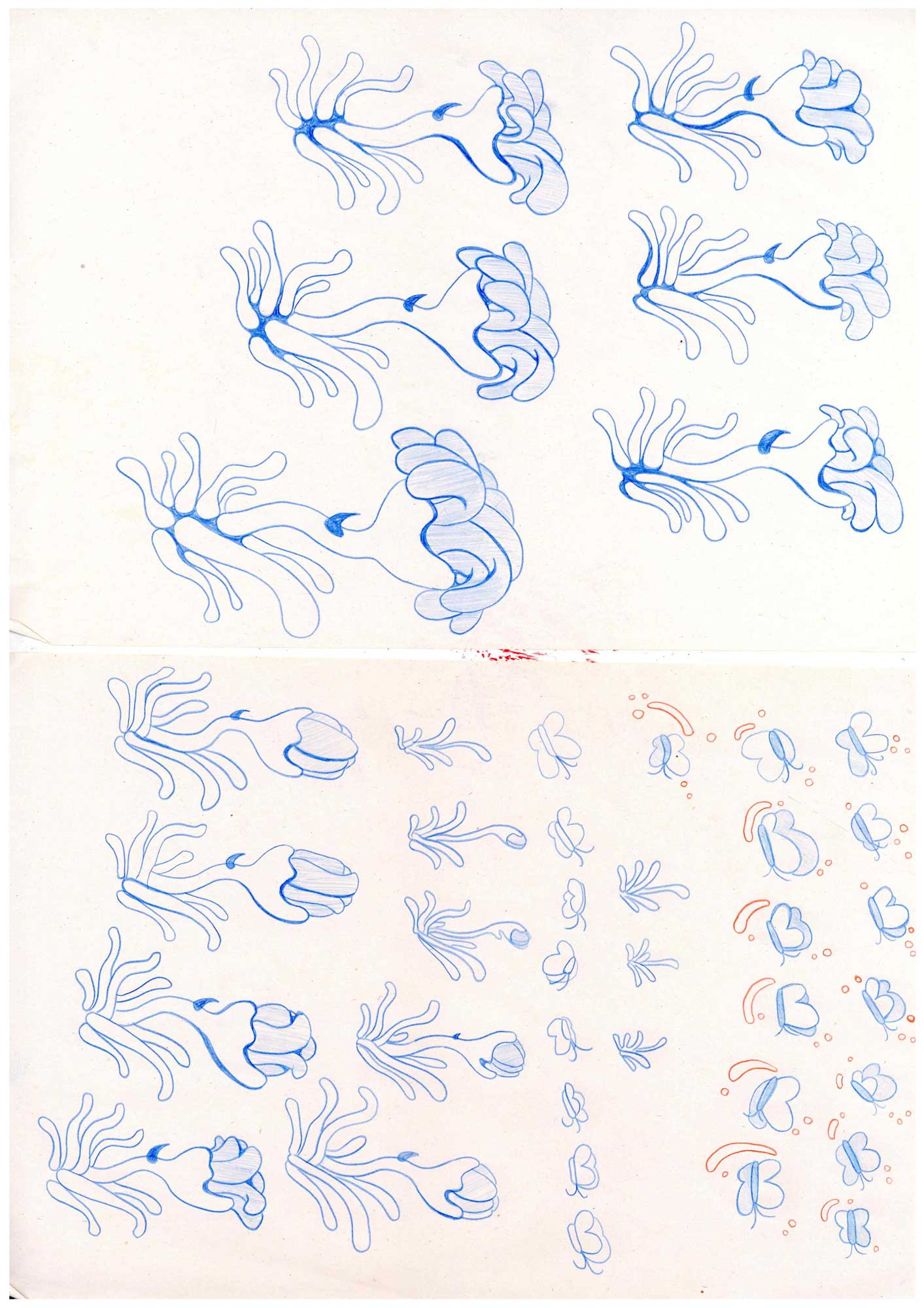
img20250311_19320540
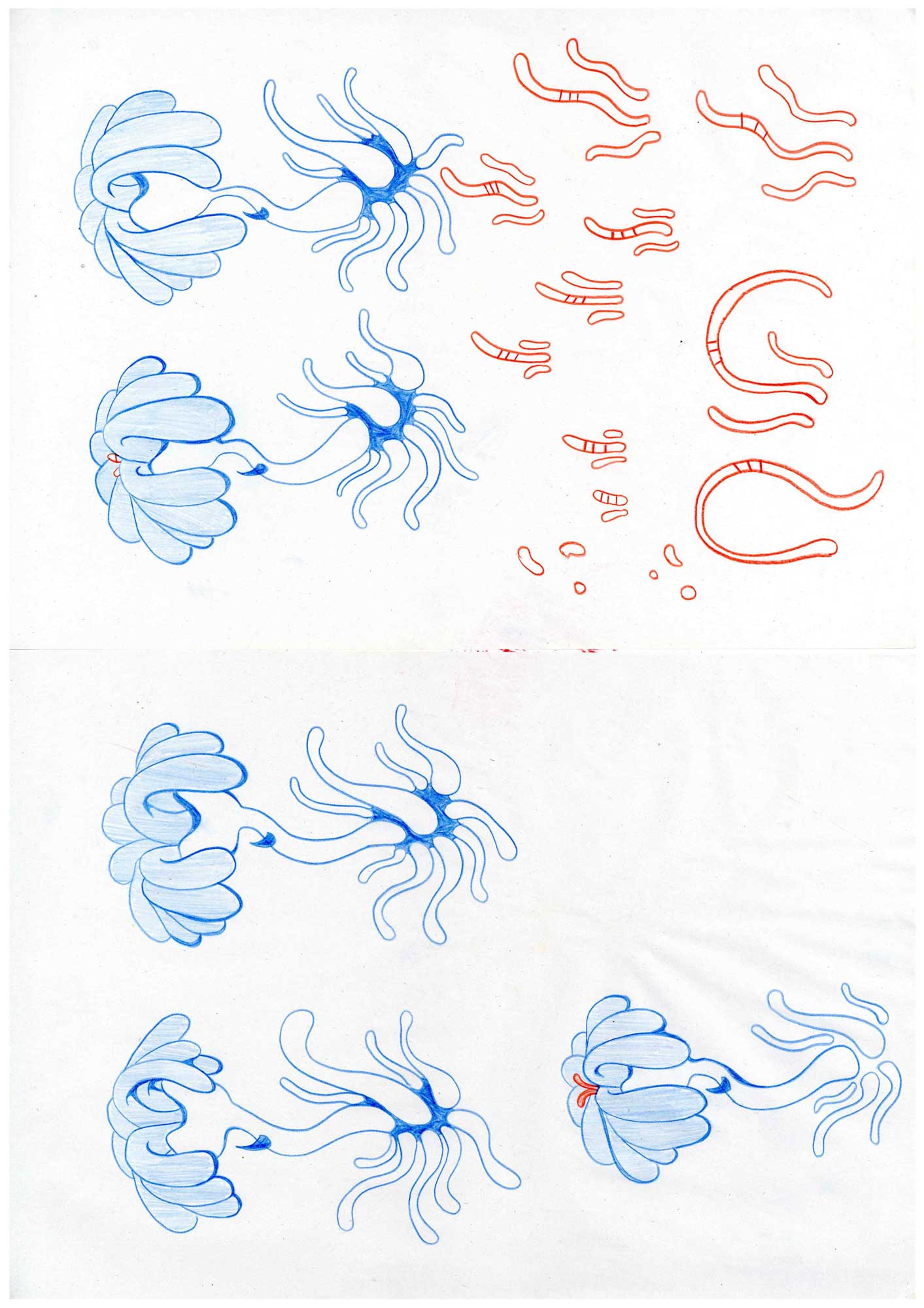
img20250311_19313126

img20250311_19304426
Finished Animation
Evaluation
For ‘Narrative and Sequence,’ I explored the connection between sacred nature, geometry, and hula hooping. This project was particularly meaningful to me as it combined two of my greatest interests: illustration and hula hooping. The process was engaging and allowed me to integrate movement, pattern, and rhythm into my visual storytelling.
As part of my research and development, I participated in workshops on bookbinding, zine-making, and animated GIF creation. These workshops expanded my technical skills and provided me with the tools to bring my ideas to life in different formats. Learning how to turn my hand-drawn illustrations into animations using Photoshop was particularly exciting. Initially, my goal was to produce a flip book as my final piece, but due to time constraints, I was unable to print it before the deadline. However, I am still submitting my digital animation, which effectively conveys my ideas, even though I would have liked to see it as a physical book. I may still print it later to have a tangible version of my work.
One of the aspects I am fond of within my final animation is the limited red and blue colour palette. I feel this choice enhances the aesthetic cohesion of the piece and gives it a striking visual identity. The process of creating the animation required a great deal of effort, as each frame was meticulously hand-drawn. I invested significant time into preliminary drawings, refining my ideas through an meticulous process. The sheer volume of drawing involved was challenging but ultimately rewarding.
Throughout this project, I prioritised experimentation, and I am glad I did. Typically, I struggle with balancing experimentation and finalising a polished piece, often feeling pressured to narrow my focus too early. This time, however, I embraced my exploratory approach and allowed my experiments with drawing to become an integral part of the final outcome. By doing so, I felt more connected to the creative process and was able to produce a piece that felt dynamic and organic rather than overly constrained.
If I were to revisit this project, there are a few elements I would like to develop further. Firstly, I would incorporate sound into the animation to enhance the sensory experience. I believe adding audio—perhaps the healing tones of singing bowls or the calming presence of birdsong—could evoke different emotional responses and deepen the viewer’s engagement with the piece. Secondly, I would make the effort to print the flip book version, as having a physical copy would add another layer of interaction to the work.
Overall, this project has been a fulfilling and enlightening experience. It allowed me to merge my love of illustration with my passion for hula hooping in a way that felt authentic and innovative. The challenges of time management and decision-making were valuable learning opportunities, and I now have a clearer understanding of how I can refine my workflow in future projects. Despite the few things I would have done differently, I am incredibly proud of my final animation and the dedication I put into every stage of its creation.